

Most ignition issues with MasterTemp 400 are caused by blocked airflow or low gas pressure.
I have worked with pool heaters for years and have repaired dozens of Pentair MasterTemp 400 units. This guide walks you through clear, safe, and practical Pentair Mastertemp 400 troubleshooting steps. Read on for step-by-step checks, easy tests you can do at home, maintenance tips, and real-world fixes I used to get heaters working fast.

36% off Today’s Exclusive Deals
Limited-time Exclusive Deals. Check current discount on Amazon.
Check Price on Amazon As an Amazon Associate I earn from qualifying purchases.
Overview: What the Pentair Mastertemp 400 is and why troubleshooting matters
The Pentair Mastertemp 400 is a high-performance gas pool heater built for fast warm-up and efficient operation. Knowing basic Pentair Mastertemp 400 troubleshooting helps you avoid costly service calls and keeps your pool ready when you want to swim. I will explain symptoms, likely causes, and hands-on fixes that match what technicians do in the field.
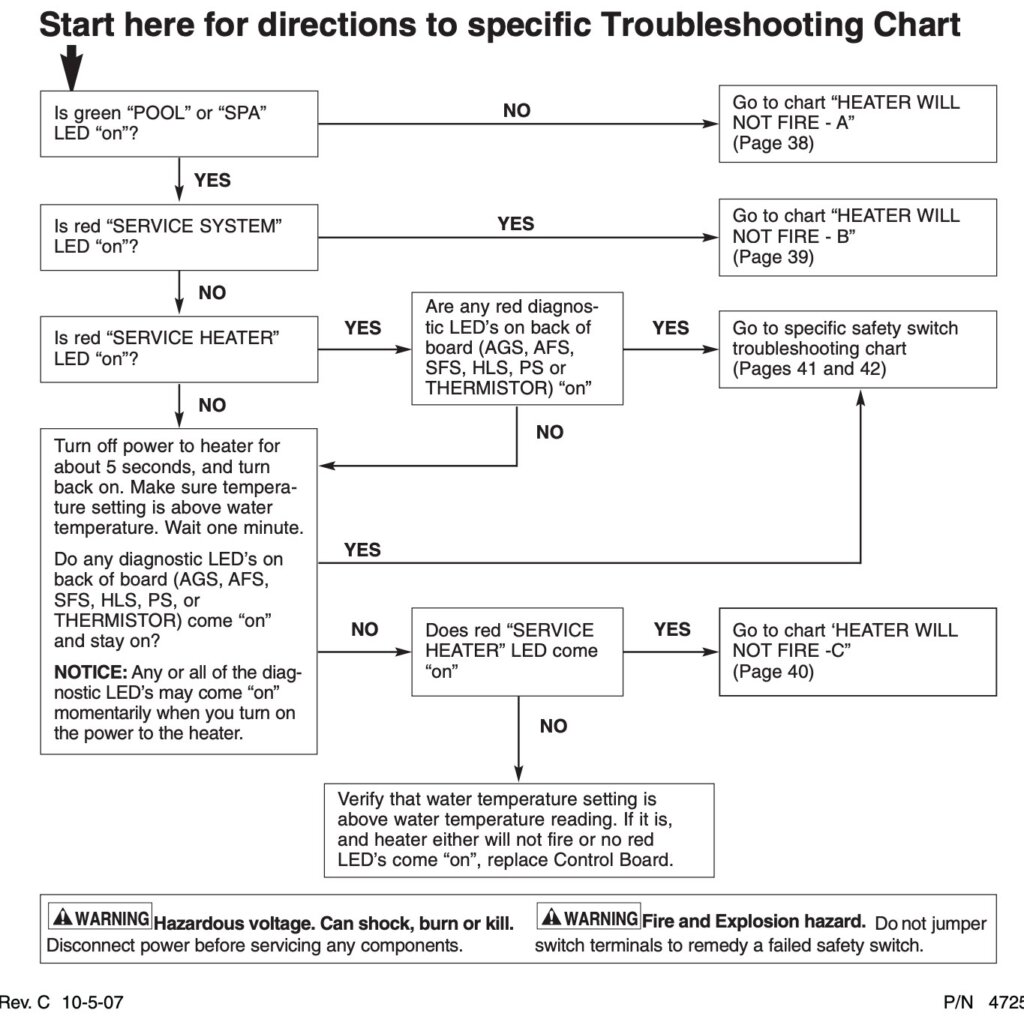
Common problems and causes for Pentair Mastertemp 400 Troubleshooting
Below are the issues you will most often see, paired with their typical causes.
• Heater won’t ignite
Causes: no gas supply, faulty igniter, blocked vent, or ignition control lockout.
• Heater ignites but shuts off quickly
Causes: poor water flow, tripped pressure switch, bad flame sensor, or thermostat problems.
• Low heat output or slow warming
Causes: scale in the heat exchanger, low gas pressure, or dirty burner ports.
• Strange noises or vibration
Causes: loose blower, debris in venting, failing fan motor, or water scale.
• Water leaks near heater base
Causes: corroded heat exchanger, failed unions, or loose pipe fittings.
• Error lights or blink codes on control board
Causes: electrical faults, sensor failures, or control board issues. Consult the manual for exact codes.
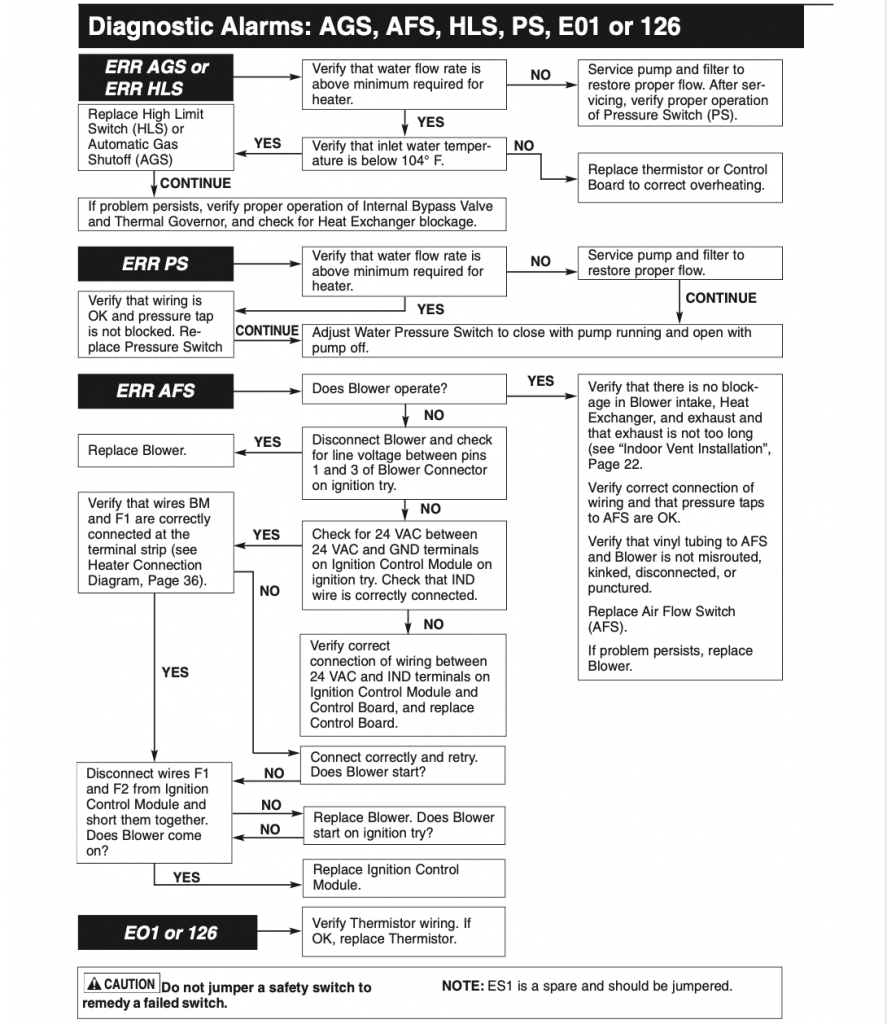
Step-by-step Pentair Mastertemp 400 troubleshooting guide
Follow these steps in order. Work safely: turn off power and gas before doing any internal checks.
-
Visual and safety check
• Confirm power to the heater at the breaker and switch.
• Confirm gas supply valve is open and other gas appliances work.
• Smell for gas; if present, shut off gas and call a pro. -
Check basic controls
• Verify thermostat or control setting calls for heat.
• Make sure pool pump is running and sending water through the heater.
• Replace a simple dead thermostat battery if present. -
Inspect airflow and venting
• Remove debris from the vent and intake.
• Ensure the area around the heater is clear for at least a few feet. -
Confirm water flow and pressure switch operation
• Clean or backwash the pool filter.
• Check for closed valves or clogged lines.
• The pressure switch should close when pump runs; if not, clean or replace it. -
Test ignition sequence
• Power on the heater and watch the ignition cycle.
• If you see sparking but no sustained flame, suspect the gas valve, orifice, or gas pressure.
• If you see no spark, test the igniter electrode and igniter wiring. -
Check flame sensor and burners
• Clean the flame sensor gently with emery cloth or fine sandpaper.
• Inspect burners for rust or blockages and clean them. -
Look for leaks and corrosion
• Inspect the heat exchanger for visible corrosion or cracks.
• Tighten unions and fittings if safe to do so. -
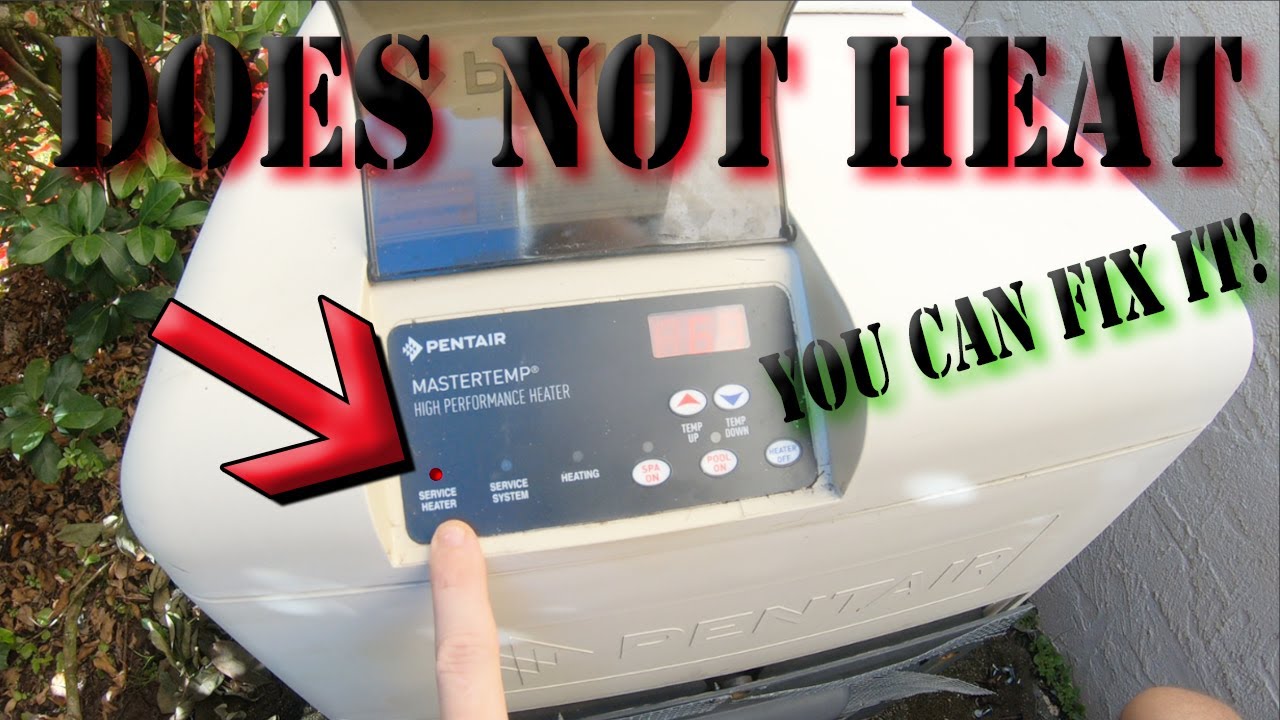
Read and record diagnostics
• Note any LED patterns or fault codes on the control board.
• Take photos for a technician if needed.
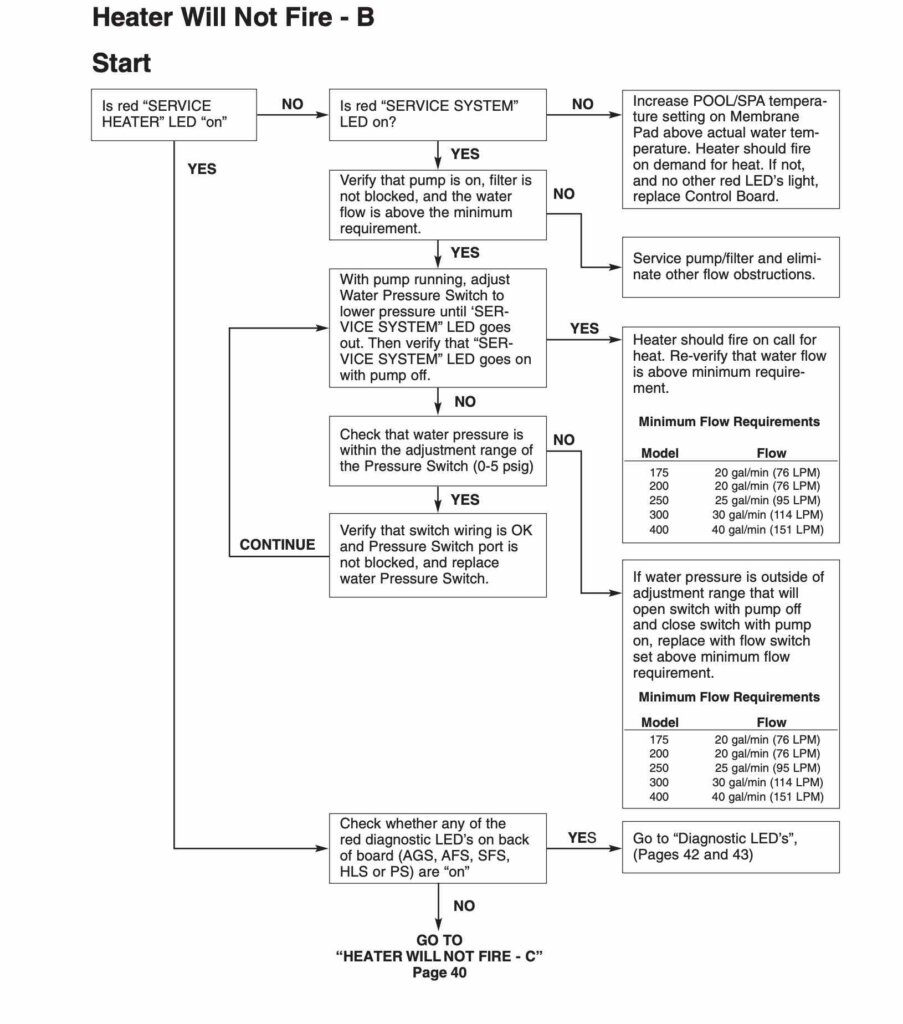
How to test key components safely
These checks use simple tools: multimeter, screwdriver, and a flashlight. Turn off power and gas when opening panels.
Igniter and flame rod
• Visual: look for cracking or heavy soot on the electrode and flame sensor.
• Electrical: check continuity on the igniter circuit per manual specs. Replace if cracked or worn.
Pressure switch
• With pump on, listen for click of switch.
• Test continuity across switch terminals; it should be closed when water flow is adequate.
Thermistor and temperature sensors
• Measure resistance at room temp and compare to manual values.
• Replace if readings are far off manufacturer specs.
Gas valve and gas pressure
• Check that the gas valve opens when calling for heat.
• If you have experience, measure manifold pressure with a manometer; otherwise call a certified gas tech.
Control board and LED diagnostics
• Note blink pattern and compare to the manual.
• Inspect connectors and wiring for corrosion and loose pins. Re-seat connectors.
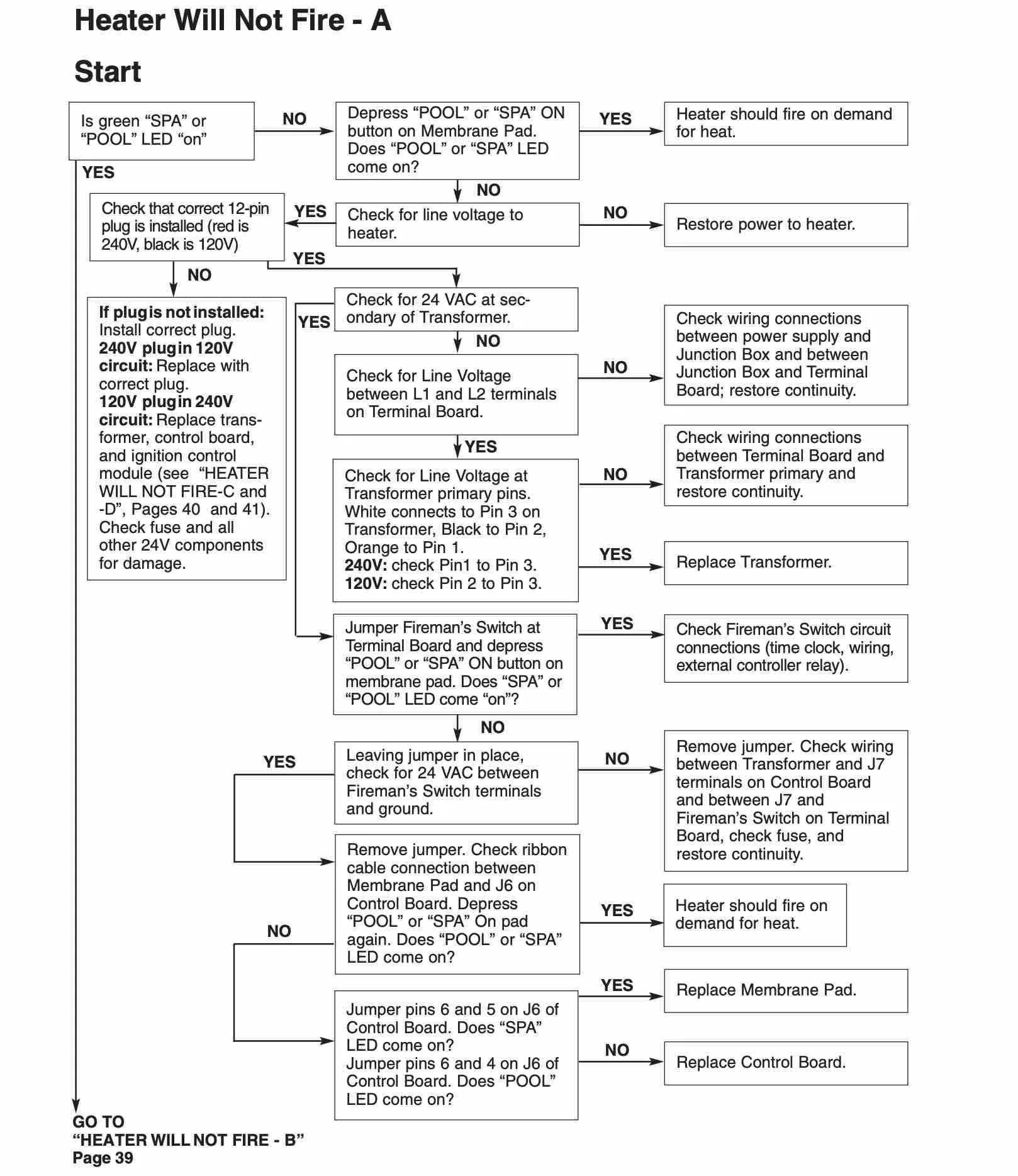
Maintenance and preventive care for reliable operation
Routine care prevents most common failures and extends heater life.
• Monthly visual checks
Look for debris, insects, or nests in vents and around blower.
• Seasonal cleaning
Flush and inspect the heat exchanger yearly. Remove scale if present.
• Keep water chemistry balanced
High calcium and low pH speed corrosion and scale. Test water weekly.
• Replace sacrificial anode or zinc if installed
This reduces electrochemical corrosion in the heat exchanger.
• Tighten wiring and fittings once a year
Vibrations can loosen screws and terminals.
• Service plan
Have a certified tech do a full service every 1–2 years, including gas pressure checks.
When to call a technician and repair vs replace
Call a pro immediately if you smell gas, see a major leak, or suspect a cracked heat exchanger. These are safety issues.
Repair if:
• Issue is a wire, sensor, igniter, or burner cleaning.
• Heater is under 8–12 years old and parts are available.
Replace if:
• Heat exchanger is cracked or heavily corroded.
• Repeated major failures occur and repair costs approach replacement value.
Costs vary by region, but expect small repairs under a few hundred dollars and large repairs or heat exchanger replacement to be higher. Get multiple quotes.
Parts, tools, and tips for buying replacements
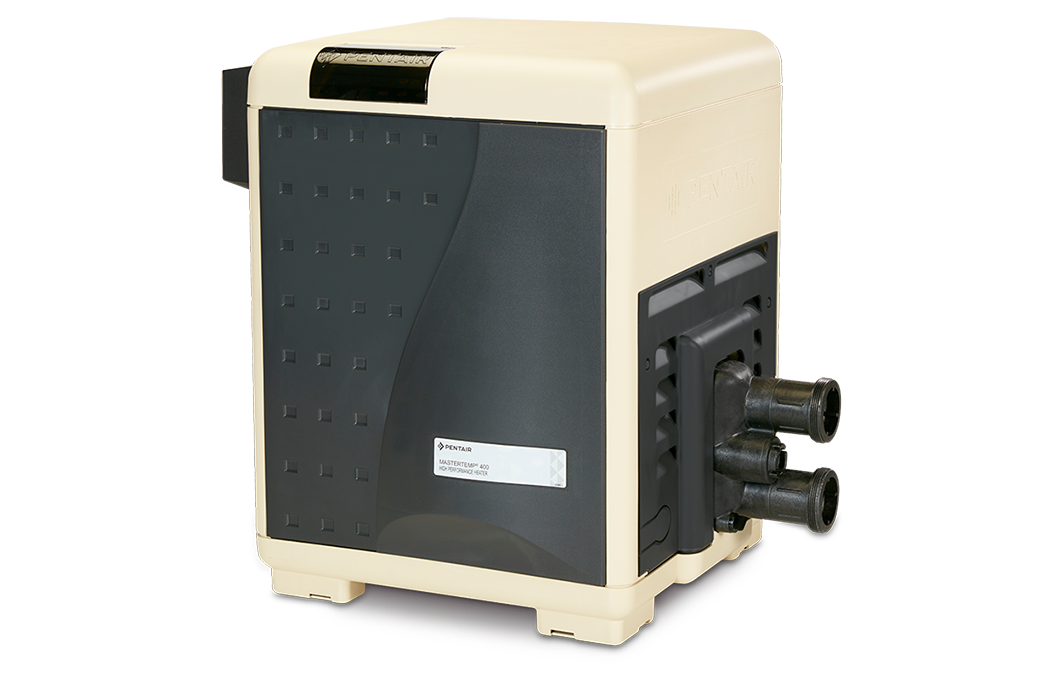
Essential parts to keep on hand if you DIY a lot: igniter electrode, flame sensor, pressure switch, burner orifice, gaskets, and a set of fuses. Tools to have: multimeter, manometer (for gas pros), nut drivers, wire brushes, and a camera to document connections.
Buy parts from authorized dealers or reputable pool supply stores to ensure correct fit and safety certification. Keep your model and serial number handy when ordering.

Frequently Asked Questions of Pentair Mastertemp 400 Troubleshooting
How do I reset my Pentair MasterTemp 400?
Turn off power at the breaker for 30 seconds and then restore power. If the unit has a reset or lockout button, follow the manual steps after power cycling.
Why does my heater spark but not light?
This is often low gas pressure, a blocked burner port, or a faulty gas valve. Check gas supply and burner cleanliness, and call a gas technician if pressure is low.
What causes the heater to shut off during operation?
Most common reasons are low water flow, tripped pressure switch, or flame loss from a dirty sensor. Clean filters and sensors first.
Can I clean the heat exchanger myself?
You can do light flushing for scale if comfortable, but deep descaling and pressure checks are best left to a pro. Improper cleaning can damage the exchanger.
How often should I service my MasterTemp 400?
Have a certified service once every 1–2 years for safety and efficiency. Do simple visual checks monthly.
Is it safe to troubleshoot gas parts myself?
Basic visual checks are fine, but gas pressure work and manifold tests should be done by a licensed technician. Safety first.
Conclusion
Pentair Mastertemp 400 troubleshooting starts with simple checks: power, gas, water flow, and vents. Many common problems respond to basic cleaning, sensor tests, or minor part replacements. For safety issues like gas leaks or a cracked heat exchanger, call a certified technician right away. Try the easy steps here, keep a maintenance routine, and you can avoid many service calls and extend the life of your heater. If this guide helped, leave a comment, subscribe for more pool care tips, or save the checklist for your next service.

