

Most pool pump issues are simple to find and fix with a step-by-step check.
I’ve spent years troubleshooting pool equipment and helping homeowners solve Swimming Pool Pump Problems Troubleshooting quickly and safely. This guide breaks down what goes wrong, why it happens, and exactly how to diagnose and fix common faults. Read on for clear steps, real-world tips from my service calls, and a maintenance plan that keeps the pump running longer.

36% off Today’s Exclusive Deals
Limited-time Exclusive Deals. Check current discount on Amazon.
Check Price on Amazon As an Amazon Associate I earn from qualifying purchases.
Understanding how pool pumps work and basic troubleshooting
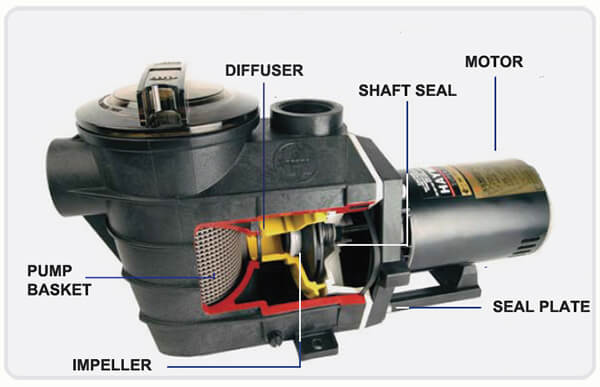
A pool pump moves water through the filter, heater, and chlorinator. If the pump fails, the pool clarity, chemistry, and circulation all suffer. Swimming Pool Pump Problems Troubleshooting starts with knowing the parts: motor, impeller, strainer basket, shaft seal, volute, and plumbing connections.
Common early checks include verifying power at the breaker, listening for unusual noises, and checking the pump lid and basket for debris. I always start with the simplest checks first. That approach finds most issues fast and cuts unnecessary repair costs.
Common problems and step-by-step troubleshooting
This section lists frequent faults, how to test them, and practical fixes. Use a systematic flow: observe, isolate, test, then repair.
Pump won’t start
- Check power and breaker. Confirm the timer or automation is set correctly.
- Test the pump at the switch. If the motor hums but won’t run, it may be a bad capacitor or seized bearings.
- If the motor is dead with no sound, test voltage at the motor terminals or call an electrician.
Swimming Pool Pump Problems Troubleshooting often finds electrical or timer faults first. I once found a pump “dead” that had a tripped GFCI in a shed. Resetting that fixed everything.
Pump loses prime or won’t prime
- Check for air leaks at the pump lid, drain plugs, union fittings, and suction-side plumbing.
- Inspect and clear the skimmer and strainer basket.
- If air is visible in the pump or filter sight glass, tighten fittings and replace seals if needed.
Air leaks are a top cause in Swimming Pool Pump Problems Troubleshooting. Replacing an old pump lid O-ring fixed prime loss in a client’s pool within 20 minutes.
Low flow or weak suction
- Clean the skimmer, pump basket, and filter. Inspect the impeller for blockage.
- Verify the filter pressure gauge. Backwash or clean cartridge as needed.
- Check for clogged suction lines or closed valves.
Low flow often means clogging or a blocked impeller. In one case, a toy lodged in the impeller cut flow by half and made the motor work harder.
Pump making loud noises or vibration
- Squealing often means worn bearings or misaligned motor.
- Grinding or rattling can indicate debris in the impeller or cavitation from restricted suction.
- Tighten mounting bolts and confirm proper pad or base support.
Address noise early to avoid motor failure. During a winter service, I found a rock trapped under the pump base. Removing it stopped the vibration and extended motor life.
Overheating motor
- Ensure the motor vents are not blocked and the fan cover is in place.
- Confirm proper voltage and that the motor is not working against a closed valve or blocked impeller.
- If thermal switches trip repeatedly, the motor may need rewinding or replacement.
Overheating can be a symptom, not the root cause, in Swimming Pool Pump Problems Troubleshooting. Always resolve cause, not just symptom.
Tools, diagnostics, and safety checklist
Use the right tools and follow safety rules. A careful diagnostic saves time and prevents injuries.
Essential tools
- Multimeter for voltage and continuity checks.
- Screwdrivers, pliers, and channel locks.
- Screw-in pump lid key or strap wrench.
- Impeller cleaning tool or long-handled brush.
- Replacement O-rings, shaft seal, and capacitor on hand for common fixes.
Diagnostic steps
- Confirm power at the panel and GFCI.
- Inspect visible plumbing and baskets.
- Test motor voltage and capacitors.
- Remove pump lid and check impeller for debris.
- Run the pump briefly to listen and watch for leaks or air.
Safety checklist
- Turn off power at the breaker before opening electrical covers.
- Drain and depressurize the system before servicing seals.
- Wear gloves and eye protection when handling chemicals or sharp parts.
Repair, parts, and when to replace the pump
Decide wisely between repair and replacement. Consider age, frequency of failures, and energy efficiency.
When to repair
- Single issue like a new shaft seal, worn O-ring, or clogged impeller.
- Motor capacitors are replaceable and cheaper than full motor swap.
- If the pump is under 7 years and otherwise in good condition.
When to replace
- Motor bearings fail and motor costs approach replacement price.
- Repeated seal leaks or frequent electrical failures.
- Older pumps are less energy efficient; a new variable-speed pump can cut energy bills.
Cost considerations
- Shaft seal replacement is moderate cost and often DIY-friendly.
- Motor rewind vs new motor: evaluate warranty and labor.
- Variable-speed pumps cost more up front but offer big savings on running costs.
My experience: I replaced several clients’ old single-speed pumps with variable-speed models and the energy savings paid back the cost within a few seasons.
Preventive maintenance plan to avoid future problems
A simple, regular plan prevents most Swimming Pool Pump Problems Troubleshooting visits. Do these weekly and seasonally.
Weekly tasks
- Empty skimmer and pump baskets.
- Read and log filter pressure and pool flow.
- Check for noisy operation or unusual vibrations.
Monthly tasks
- Inspect and lubricate pump lid O-ring with silicone grease.
- Check union fittings and clamp bolts for tightness.
- Clean or replace cartridge filters as needed.
Seasonal tasks
- Winterize the pump if you live in freezing climates.
- Inspect shaft seal and replace if leaking.
- Consider professional inspection annually for electrical safety and motor health.
A routine saved one customer from a catastrophic shaft-seal leak. They had followed the plan; a small leak was caught early and a quick seal swap avoided major plumbing work.

PAA-style questions (common quick answers)
What causes my pump to lose prime?
Air leaks on the suction side and clogged baskets or impellers cause loss of prime. Tighten fittings and clear debris to fix it.
Why is my pump humming but not running?
A bad start capacitor or seized bearings cause humming without rotation. Test the capacitor or try turning the shaft by hand when power is off.
How do I know if the motor is burned out?
Look for no noise, no heat, or a burnt smell and test for voltage at the motor. If voltage is present but the motor won’t start, the motor likely needs repair or replacement.

Personal experience, mistakes to avoid, and pro tips
I once replaced a pump motor only to find flow still poor because the impeller had plastic melted onto it from a stuck pool toy. Lesson learned: always inspect the hydraulic side before expensive electrical repairs.
Mistakes to avoid
- Replacing the motor without checking plumbing and impeller.
- Ignoring minor leaks that become bigger and costlier.
- Running a pump dry to “test” it; that destroys seals quickly.
Pro tips
- Carry a spare seal and lid O-ring if you service multiple pools.
- Use a clear pump lid so you can watch for air at startup.
- Consider upgrading to a variable-speed pump for long-term savings.
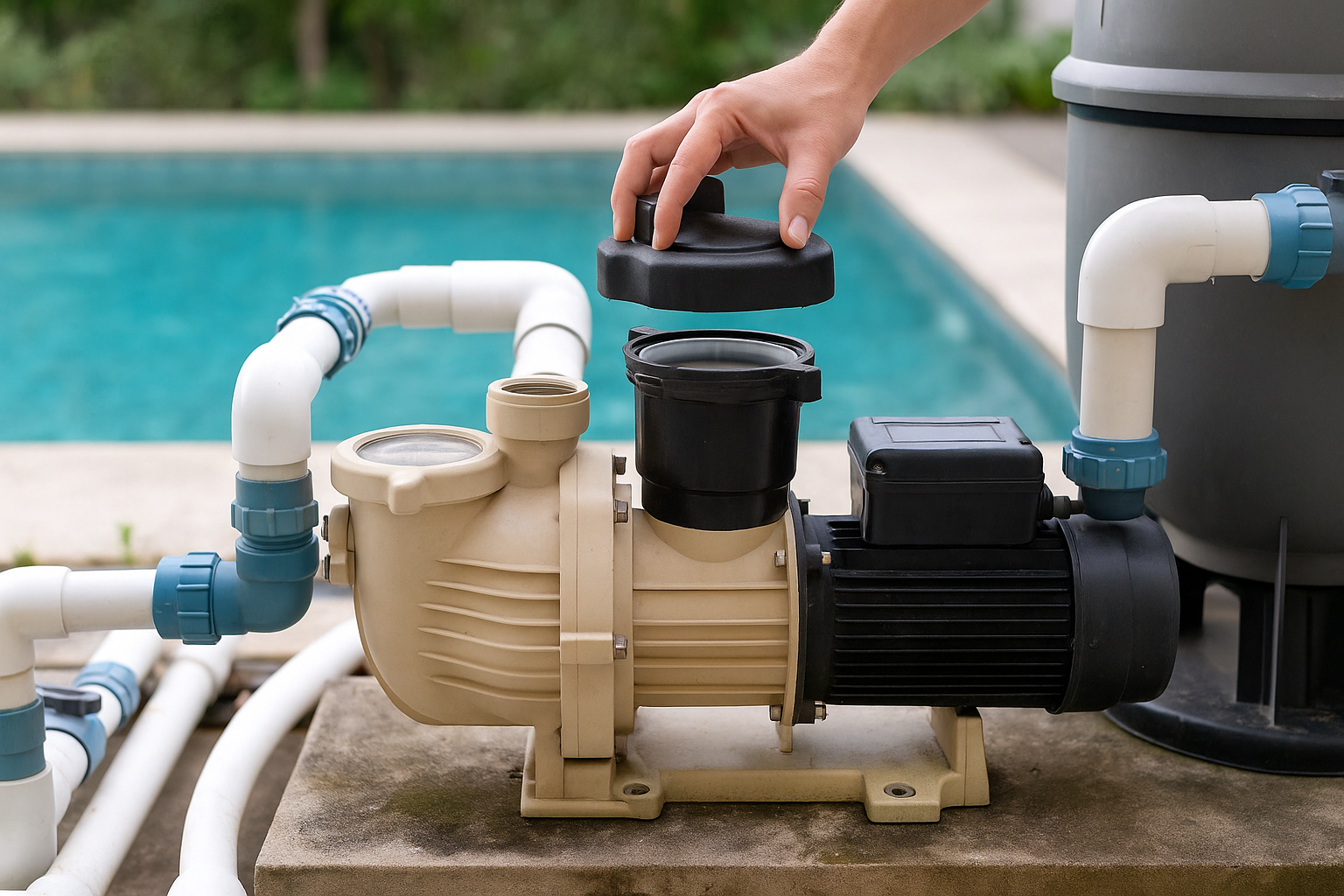
Frequently Asked Questions of Swimming Pool Pump Problems Troubleshooting
What is the first thing to check when a pump stops working?
Check the circuit breaker, GFCI, and any timers or automation. Confirm power is reaching the pump before opening the unit.
Can I replace a shaft seal myself?
Yes, if you are comfortable turning off power, draining the pump, and disassembling the housing. Follow the pump manual and use the exact seal size.
How often should I clean the pump basket?
Clean the pump basket at least once a week in busy seasons and after storms or heavy leaf fall. A clogged basket reduces flow and strains the motor.
Is a noisy pump always a sign of motor failure?
Not always. Noise can come from debris in the impeller, air in the system, or loose mounts. Check these first before assuming motor failure.
How long do pool pumps typically last?
A well-maintained pump can last 8 to 15 years depending on usage and care. Energy-efficient, properly sized pumps with routine maintenance last longer.
Should I upgrade to a variable-speed pump?
Yes, if you want lower energy bills and quieter operation, variable-speed pumps are more efficient for continuous circulation. The higher initial cost usually pays back over time through energy savings.
Conclusion
Swimming Pool Pump Problems Troubleshooting is about methodical checks, simple repairs, and regular care. Start with power and simple inspection, address air leaks and clogs, and schedule routine maintenance to avoid big repairs. Use what you learned here: perform basic diagnostics, carry key parts, and call a pro when electrical or complex mechanical work is needed. Try one maintenance task this week—clean the pump basket—and see how much smoother your system runs. If this guide helped, subscribe for more tips, share your experience in the comments, or ask a specific question below.

