

Transmission troubleshooting helps spot fluid, clutch, sensor, and gear problems fast and clearly.
I have spent years diagnosing transmissions on cars, trucks, and fleet vehicles. This guide shares clear steps, hands-on tips, and real-world lessons so you can run effective transmission troubleshooting. Read on to learn how to find causes, test key parts, decide when to DIY, and save time and money with smart diagnostics.

36% off Today’s Exclusive Deals
Limited-time Exclusive Deals. Check current discount on Amazon.
Check Price on Amazon As an Amazon Associate I earn from qualifying purchases.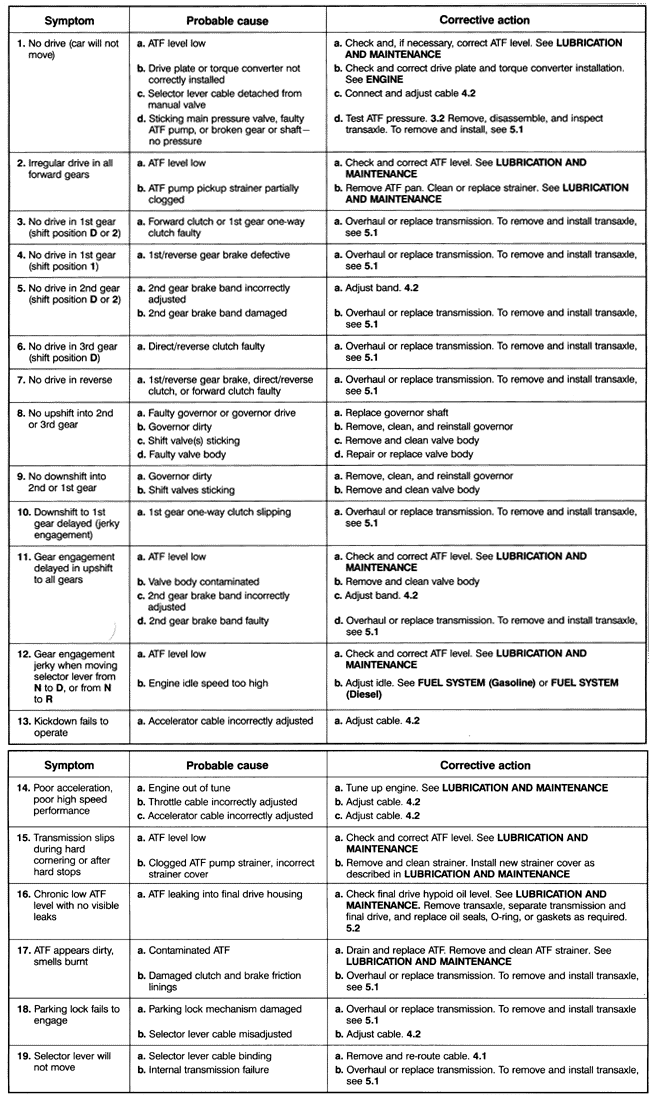
Common transmission problems and what they mean
Transmission troubleshooting begins with knowing common failure points. These issues show up as symptoms you can feel, hear, or see.
- Slipping gears. The engine revs but the vehicle does not accelerate smoothly. This often signals worn clutch packs, low fluid, or torque converter trouble.
- Harsh shifting or jerking. Shifts feel rough or delayed. Often caused by bad solenoids, low fluid, or worn valve bodies.
- Transmission fluid leaks. Red or brown fluid under the car. Leaks lead to low pressure and damage if not fixed.
- Burning smell or dark fluid. Overheated fluid means internal wear or cooling failures.
- Warning lights and limp mode. Sensors detect problems and force reduced performance to protect the transmission.
Why these matter: early transmission troubleshooting prevents costly rebuilds. Catching issues early often lets you repair seals, change fluid, or replace a solenoid instead of replacing the entire unit.

How to start transmission troubleshooting: a simple checklist
Start with basic checks that reveal most problems quickly. Work through this checklist before assuming a major repair.
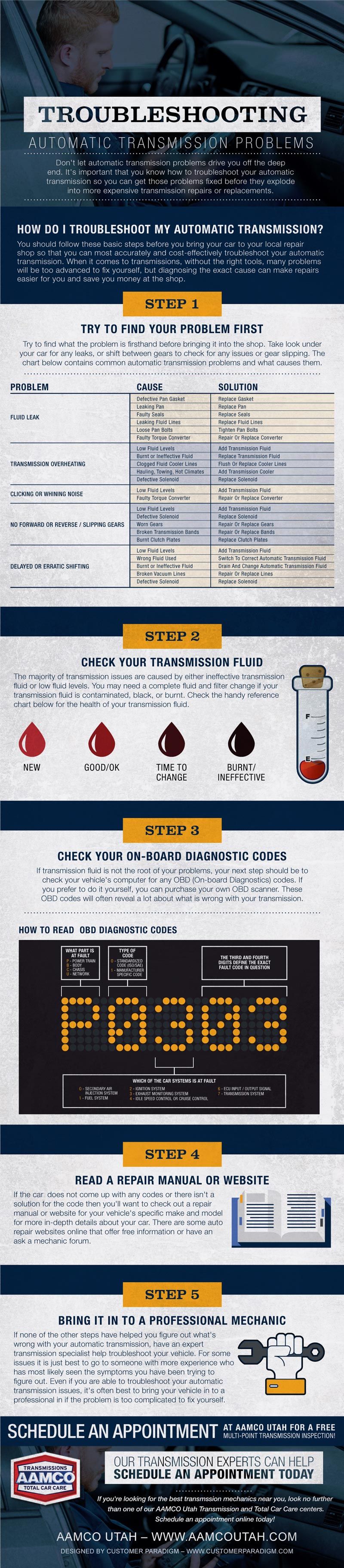
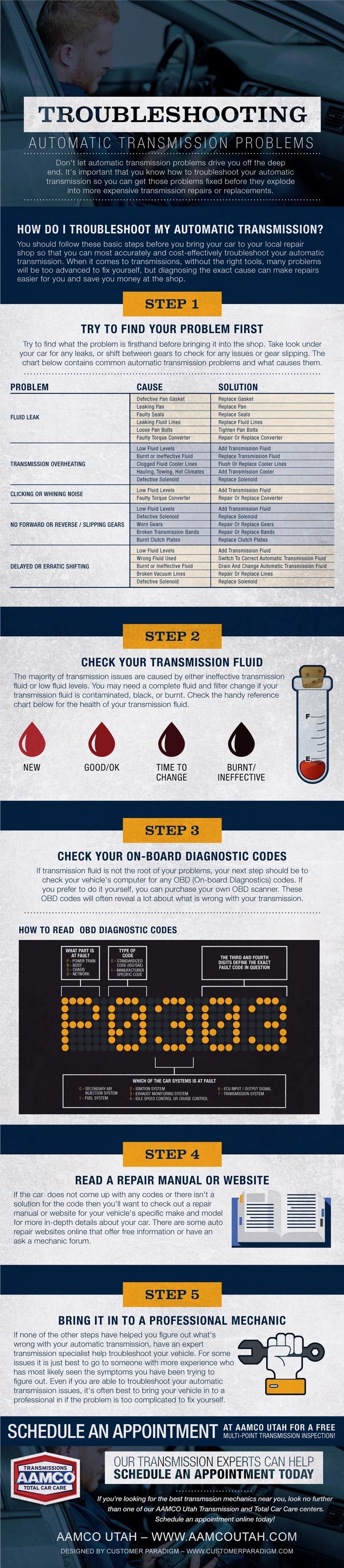
- Check fluid level and condition. Warm the engine and use the dipstick if equipped. Fluid should be bright red and smell clean.
- Scan for error codes. A code reader reveals sensor or solenoid faults. Codes narrow your troubleshooting fast.
- Inspect for leaks. Look under the vehicle and around the pan, cooler lines, and axle seals.
- Test drive with notes. Record when problems happen: at low speed, at shift points, or under load.
- Listen and feel. Note grinding, whining, or clunking sounds and when they occur.
Practical tip from experience: always fix leaks and get fluid right before replacing parts. Low fluid causes many false symptoms and can ruin new parts fast.
Tools and tests for effective transmission troubleshooting
You do not need a shop full of gear to start, but a few tools speed diagnosis and reduce guesswork.
- Basic tools
- Screwdrivers, sockets, pliers
- Jack and stands or ramps
- Drain pan and rags
- Diagnostic tools
- OBD2 code reader with transmission live data
- Infrared thermometer to check fluid and pan temp
- Pressure gauge for manual transmission hydraulic checks
- Tests to run
- Fluid pressure test to confirm pump output
- Stall-speed test for torque converter issues (use caution)
- Solenoid activation test using a scan tool's bi-directional controls
Safety note: some tests require the vehicle to be driven or the engine revved. Use care, and park on level ground with the parking brake set.
Step-by-step transmission troubleshooting process
Follow a logical flow to avoid wasted time and expense. This step-by-step approach has helped me find hard-to-see faults.
- Gather symptoms
– List sounds, smells, warning lights, and driving conditions when problems appear. - Visual and fluid check
- Look for leaks and check fluid color and level.
- Scan for codes
- Read stored and pending codes. Take screenshots or notes.
- Basic repairs
- Fix leaks, replace fluid and filter, clear codes, then retest.
- Functional tests
- Use live data to check shift timing, solenoid activation, and pressure readings.
- Targeted repairs
- Replace solenoids, sensors, or wiring based on test evidence.
- Re-evaluate
- Road test and confirm the issue is resolved. If not, escalate to valve body or internal inspection.
Example from my workshop: a van came in with heavy shift flare. A scan showed a slipping clutch code, but fluid was low. After refill and filter change, the problem vanished. Had we replaced the valve body first, the owner would have paid for needless parts.
When to DIY and when to hire a pro
Transmission troubleshooting can be DIY-friendly for some tasks. Other work needs a pro.
You can DIY:
- Fluid and filter change on many automatics
- Visual inspections and fluid top-ups
- Replacing external sensors or solenoids with clear codes
You should hire a pro for: - Internal rebuilds or clutch pack replacement
- Torque converter removal or complex pressure testing
- Unclear faults after basic checks and code diagnostics
Rule of thumb from experience: if you need to remove the transmission or if diagnostic tests are inconclusive, get professional help. Mistakes on internal work are costly.

Preventive maintenance to avoid transmission problems
Good maintenance keeps transmissions healthy and reduces the need for troubleshooting.
- Change fluid and filter at intervals recommended by the maker. Severe use needs shorter intervals.
- Keep the cooling system working. Overheating kills transmission fluid.
- Avoid towing beyond the vehicle’s limits. Excess heat damages clutches.
- Drive gently during warm-up. Cold shifts stress components.
- Inspect for leaks and repair them right away.
These measures extend the life of your transmission and reduce both downtime and repair cost.

Cost expectations and decision-making
Knowing costs helps you decide whether to repair or replace.
- Fluid and filter change: low cost; often $100–$300 depending on vehicle.
- Solenoid or sensor replacement: moderate cost; parts and labor vary widely.
- Valve body repair: mid-to-high cost due to labor and parts.
- Rebuild or replace transmission: high cost; often several thousand dollars.
- Used transmission swap: cheaper but riskier due to unknown history.
Consider vehicle age, mileage, and overall condition. If repair exceeds the value of the vehicle, replacement or part-out may be wiser.

Common mistakes and lessons learned from real cases
I have seen recurring errors that waste time and money. Avoid these mistakes.
- Replacing parts without testing. Don’t swap a valve body before checking fluid and codes.
- Ignoring leaks. Low fluid can hide deeper damage and ruin new parts.
- Skipping a proper test drive. Symptoms often show only under load or at speed.
- Using the wrong fluid. Use manufacturer-specified fluid; wrong fluid alters clutch friction and pressure.
- Not documenting the work. Keep notes and photos for later reference and warranty claims.
Personal insight: label each connector and take photos when disassembling. Reassembly is easier and faster.

Advanced transmission troubleshooting topics
For long-term enthusiasts and technicians, these topics help solve tough problems.
- Electrical diagnostics. Wiring faults and intermittent connectors can mimic mechanical failure.
- Hydraulic analysis. Pressure data reveal pump and valve body issues.
- Software updates. Modern transmissions rely on control modules; updates fix shift logic problems.
- Rebuilding strategies. Proper reuse of parts and correct clearances are critical in rebuilds.
If you like solving puzzles, learning these advanced skills pays off. But practice on simple jobs before attempting complex work.
Frequently Asked Questions of Transmission Troubleshooting
What is the first thing I should check when a transmission acts up?
Start with fluid level and condition, then scan for error codes. Those checks reveal most simple causes.
Can low transmission fluid cause slipping?
Yes. Low fluid reduces pressure and can cause slipping, harsh shifts, or overheating.
Is it safe to drive with a transmission leak?
It's risky. Driving with low fluid leads to fast damage. Stop and repair leaks promptly.
How often should I change automatic transmission fluid?
Follow manufacturer guidance. Many recommend 30,000–60,000 miles for severe use or longer intervals for normal use.
When does a transmission need a rebuild instead of a repair?
A rebuild is needed for extensive internal wear, damaged clutch packs, or failed torque converters. Tests and inspection determine this.
Can a software update fix shift problems?
Yes. Modern transmissions use software for shift timing. Updates can improve behavior or resolve known faults.
Conclusion
Transmission troubleshooting is a mix of method, tools, and real-world sense. Start with fluid, codes, and a careful test drive. Use step-by-step checks to narrow causes and save money. When in doubt, consult a pro to avoid bigger bills. Try the checklist in this guide, keep records, and act early to protect your transmission. Share your experience, ask a question below, or subscribe for more hands-on vehicle repair guides.

