

If you’ve ever spent a chilly morning in your camper waiting for hot water that never comes, you know how important your camper water heater is. Whether you want a warm shower or need hot water for washing dishes, a working water heater makes your RV feel like home. But when it fails, it can be confusing and stressful—especially if you’re not sure where to start. This guide will help you understand, diagnose, and fix the most common problems with camper water heaters. You’ll learn what signs to watch for, how to troubleshoot, and when it’s better to call a professional.
How Camper Water Heaters Work
Before jumping into troubleshooting, it helps to understand the basics of how your camper water heater operates. Most RVs use either a propane (gas), electric, or combination water heater. Common brands include Atwood, Suburban, and Dometic.

36% off Today’s Exclusive Deals
Limited-time Exclusive Deals. Check current discount on Amazon.
Check Price on Amazon As an Amazon Associate I earn from qualifying purchases.A typical RV water heater has a tank (often 6 or 10 gallons) that heats water using either a propane burner, an electric element, or both. Some modern models are tankless and heat water as it passes through. Water is drawn from your fresh tank or city water connection, heated, and sent to your sinks and showers.
Key components include:
- Thermostat: Controls water temperature.
- Heating Element: Electric coil for heating.
- Propane Burner & Igniter: For gas heating.
- Anode Rod: Protects against corrosion (mainly in Suburban heaters).
- Pressure Relief Valve: Prevents unsafe pressure buildup.
- Control Board: Manages ignition and diagnostics (on newer models).
Knowing which type you have is important, as troubleshooting steps can vary. You can find this information in your owner’s manual or on the unit’s label.
Common Camper Water Heater Problems
Most issues fall into a few categories. Here are the most frequent problems you might face:
- No Hot Water: The heater won’t produce hot water at all.
- Water Not Hot Enough: Water is only lukewarm.
- Water Too Hot: Water is scalding or above safe limits.
- Leaking Water Heater: Drips or puddles around the heater.
- Strange Noises: Rumbling, popping, or whistling sounds.
- Pilot Light Won’t Stay Lit: For propane models.
- Burner Won’t Ignite: Clicking but no flame.
- Electric Element Not Heating: No heat on electric mode.
- Foul Smell or Discolored Water: Rotten egg smell or rusty water.
- Error Codes on Digital Models: Control board shows a fault.
Let’s break down how to identify and fix each of these issues.
Diagnosing The Problem
Troubleshooting starts with observing the symptoms. Here’s a step-by-step approach:
- Check Power Sources: Is your unit set to electric, gas, or both? Is there power to the RV (shore power or battery)?
- Listen and Look: Do you hear the burner trying to ignite? Is there any water pooling? Are indicator lights on?
- Test Both Modes: If you have a combo heater, try both electric and gas.
- Look for Error Codes: Some units have diagnostic lights or codes. Check your manual.
Troubleshooting No Hot Water
Gas Mode
- Propane Supply: Make sure your propane tank isn’t empty. Open the valve fully.
- Ignition Sequence: Listen for the igniter clicking and see if the burner lights. If you only hear clicks, the igniter may be misaligned or dirty.
- Thermocouple/Flame Sensor: If the pilot won’t stay lit, the thermocouple may be faulty or dirty.
- Control Board: Blinking lights or error codes may point to a control board problem.
Electric Mode
- Shore Power/Battery: Is your RV plugged in and getting power? Check the circuit breaker or fuse.
- Heating Element: Elements can burn out. Test with a multimeter for continuity.
- Thermostat: A stuck thermostat can prevent the heater from turning on.
Pro tip: Many people forget the water heater bypass valve after winterizing. If it’s still in bypass mode, hot water won’t reach your faucets.
Water Not Hot Enough
- Thermostat Setting: Most units heat to 120–140°F. If it’s set lower, adjust the thermostat.
- Sediment Buildup: Minerals can insulate the heating element, making water lukewarm. Flushing the tank helps.
- Electric Element Issues: A partially failed element may not heat fully.
- Propane Pressure: Low propane or dirty burner can lead to weak flame.
Extra insight: In cold weather, water coming into the tank may be so cold that it cools down the hot water quickly. Insulating pipes and the heater helps.
Water Too Hot
If the water is scalding, this is often a thermostat problem.
- Faulty Thermostat: Replace it if it’s not regulating properly.
- Stuck Relay (Electric Only): If the relay that controls the element is stuck closed, the water keeps heating.
- Bypass Valve Error: If cold water is not mixing properly, all you get is straight hot water.
Safety tip: Always test water temperature before use. Scalding water can cause serious burns.
Leaking Water Heater
Leaks need fast attention to avoid water damage.
- Loose Fittings: Check all water connections and tighten them gently.
- Pressure Relief Valve: If it’s leaking, it may be faulty or there could be excess pressure.
- Tank Leak: If water drips from the tank itself, it usually means corrosion. Replacement is the only real fix.
- Anode Rod: On Suburban heaters, a worn rod can cause leaks.
Beginner mistake: Ignoring small leaks can quickly lead to mold and rot in your RV’s floor.
Strange Noises
Common noises include rumbling, popping, or whistling.
- Sediment in Tank: Minerals pop and crack as water heats. Flushing the tank usually solves this.
- High Pressure: Whistling may come from the relief valve. Check system pressure.
- Loose Parts: Vibrating elements or mounts can make noise.
Insight: Hard water areas cause faster sediment buildup. Use a water filter to reduce this.
Pilot Light Or Burner Problems (gas Models)
- Air in Gas Line: After refilling or replacing tanks, air can block ignition. Purge by lighting the stove first.
- Clogged Orifice: Bugs and debris sometimes clog the burner. Clean gently with compressed air.
- Bad Thermocouple: If it won’t stay lit, the sensor may need cleaning or replacing.
Electric Heating Element Won’t Heat
- Broken Element: Test for continuity with a multimeter. No reading means it’s dead.
- Wiring Issue: Loose or broken wires can stop power flow.
- Tripped Breaker: Reset at your main panel.
Pro tip: Always turn off power before inspecting electric parts.
Foul Smell Or Discolored Water
- Rotten Egg Smell: This means bacteria in the tank, often from standing water. Flush with a vinegar solution.
- Rusty Water: Anode rod is likely worn out. Replace it.
- Greenish Tint: Copper pipes can give a green color if water is acidic.
Extra insight: Not running your water heater for weeks can cause bacteria growth. Flush it if the RV has been stored.
Error Codes On Digital Models
Modern heaters may show codes. Check your manual for meanings. Common codes include:
- Ignition failure
- Over-temperature
- Sensor fault
Usually, resetting the unit or cycling power clears minor errors. If the code returns, parts may need replacing.
When To Call A Professional
Some problems are best left to RV technicians:
- Tank Leaks: Replacement is the only fix.
- Gas Leaks: If you smell gas, shut off the supply and get help.
- Electrical Shorts: Risk of shock or fire.
- Control Board Replacement: Requires wiring knowledge.
If a fix feels uncomfortable or dangerous, it’s always safer to call in an expert.
Practical Maintenance Tips
Preventing problems is easier than fixing them. Here are some maintenance tips:
- Flush the Tank: At least once a year, drain and flush out sediment.
- Check the Anode Rod: Replace if less than half remains.
- Inspect Seals and Fittings: Look for leaks regularly.
- Operate Both Modes: Run both gas and electric modes occasionally to keep parts working.
- Winterize Properly: Drain or bypass the heater before freezing temperatures.
- Clean Burner and Vents: Keep them clear of dust and insects.
- Test Relief Valve: Lift the valve handle once a year to ensure it works.
Extra tip: Use a water pressure regulator at RV parks to protect your heater from high pressure.
How To Flush And Clean Your Camper Water Heater
Flushing removes sediment and extends the life of your heater.
You’ll need:
- Water heater flush wand or flexible hose
- Bucket
- White vinegar (for heavy buildup)
- Socket wrench (for anode rod)
Steps:
- Turn off power and gas to the heater.
- Let water cool to avoid burns.
- Remove the drain plug (and anode rod if present).
- Open the pressure relief valve to help water drain faster.
- Insert flush wand and spray until clear water runs out.
- For tough buildup, add 2-3 gallons of vinegar to the tank, let sit for a few hours, then flush.
- Replace plug/anode rod and refill the system.
- Check for leaks before turning power back on.
Most owners miss the vinegar step, which can dramatically improve heating efficiency.
Comparison Of Gas Vs. Electric Water Heaters In Campers
Here’s a quick look at the differences between gas and electric RV water heaters:
| Feature | Gas | Electric |
|---|---|---|
| Heating Speed | Faster | Slower |
| Energy Source | Propane | Shore Power/Generator |
| Operating Cost | Higher (if propane is expensive) | Lower at campgrounds |
| Maintenance | Requires burner cleaning | Element can fail |
| Use Off-Grid | Yes | Not unless you have a generator |
Tip: Many campers use both modes for faster recovery—gas and electric together heat water quicker.
How To Replace A Faulty Anode Rod
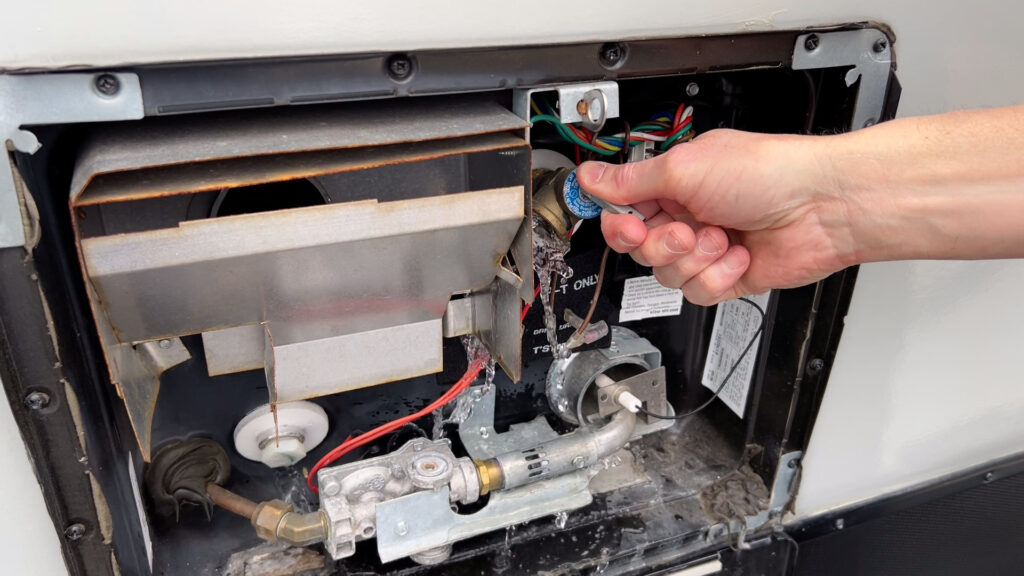
On Suburban heaters, the anode rod is vital for protecting the tank.
Steps:
- Turn off power and gas.
- Let the water cool.
- Open the pressure relief valve.
- Use a socket wrench to unscrew the anode rod.
- Inspect it—replace if it’s less than half its original thickness.
- Wrap threads with Teflon tape.
- Install the new rod and tighten.
- Refill and check for leaks.
Many beginners forget to use Teflon tape, which can cause leaks at the threads.
Diagnosing With A Multimeter
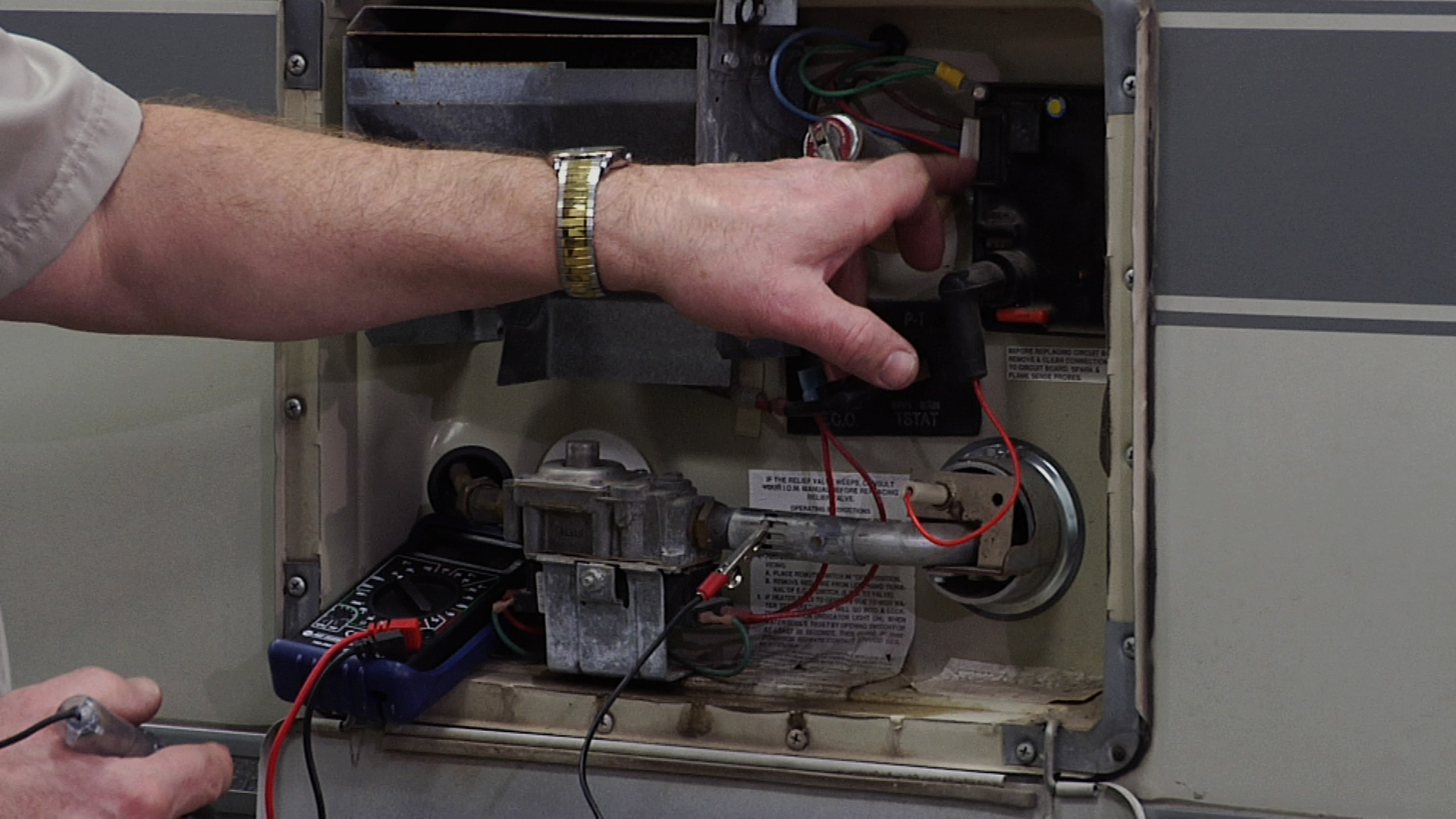
A multimeter is your best friend for electrical troubleshooting.
- Set to continuity mode to test heating elements.
- For 120V heaters, check for voltage at the element terminals.
- No voltage? Check fuses and wiring.
- Continuity but no heat? The thermostat may be stuck.
Safety warning: Only test electrical parts with power disconnected unless you are experienced.

Data: Average Lifespan Of Camper Water Heaters
Most RV water heaters last 6–10 years with regular care. Electric elements often fail first, while tanks last longer if flushed and the anode rod is replaced as needed.
| Component | Average Lifespan |
|---|---|
| Tank | 8–12 years |
| Electric Element | 3–6 years |
| Thermostat | 6–8 years |
| Anode Rod | 1–2 years |
| Control Board | 6–10 years |
Tip: Hard water, lack of maintenance, and freezing can reduce lifespan.
Preventing Freezing And Winter Damage
If you camp in cold climates or store your RV over winter, freezing is the enemy.
- Always drain the heater before freezing temperatures.
- Use RV antifreeze in the system (never in the water heater tank itself).
- Some models have electric tank heaters—turn these on when parked in freezing weather.
Beginner pitfall: Forgetting to bypass the water heater when adding antifreeze can damage the unit.
Signs You Need A New Water Heater
Sometimes, repair isn’t worth it. Consider replacement if:
- The tank is leaking (beyond a fitting or valve).
- The unit is over 10 years old and repairs are frequent.
- Replacement parts are no longer available.
- Heating is inconsistent despite repairs.
Newer models may be more energy-efficient and offer features like digital controls or tankless operation. If you’re considering an upgrade, check if your RV’s electrical system can support a higher-wattage heater.
How To Read And Reset Error Codes
Digital water heaters often have lights or displays that flash error codes. Each brand’s codes are different, so check your manual.
Basic steps:
- Turn off the heater’s power for 30 seconds.
- Turn it back on and watch the lights or display.
- Count flashes or read the code, then look it up in your manual.
Resetting solves many minor errors, but if the same code returns, you’ll need to address the underlying issue.
Upgrading To A Tankless Water Heater
Many RVers are moving to tankless water heaters for endless hot water and better efficiency. These units heat water as you use it, so there’s no waiting for recovery.
Pros:
- Unlimited hot water (as long as you have fuel/power)
- Lighter weight
- Space-saving
Cons:
- Higher upfront cost
- Needs good water pressure
- Can be sensitive to low temperatures
If you upgrade, make sure the new unit fits your existing space and connections.
Safety Checks After Repair
After any repair or maintenance, always double-check:
- All valves and plugs are tightened and leak-free.
- Water temperature is safe.
- Power and propane connections are secure.
- No gas smell or electrical burning odor.
Test the unit in both gas and electric modes, and look for any error codes before relying on it for daily use.
For more in-depth technical details, you can visit the Wikipedia page on water heating.
Frequently Asked Questions
Why Does My Camper Water Heater Keep Tripping The Breaker?
A heater tripping the breaker usually means the electric heating element has failed or there’s a short circuit. Check the element for continuity and inspect the wiring for damage. If you’re unsure, call a professional.
How Often Should I Flush My Camper Water Heater?
Flush the tank at least once a year, or more often if you use the RV frequently or have hard water. Regular flushing removes sediment and helps the heater run efficiently.
Can I Run My Water Heater On Both Gas And Electric At The Same Time?
Yes, most combo models allow you to run both modes together for faster heating. This is helpful when you need to supply hot water to multiple fixtures quickly.
What Is The Purpose Of The Anode Rod?
The anode rod protects the tank from corrosion by attracting minerals that would otherwise damage the metal. Replace it when it’s less than half its original size.
Is It Safe To Work On My Camper Water Heater Myself?
Basic tasks like flushing the tank or replacing the anode rod are safe for most owners. For gas or electrical repairs, make sure you understand the risks and turn off all power or fuel supplies first. If in doubt, get help from a qualified RV technician.
A reliable camper water heater means comfort and convenience on your travels. With a little knowledge and regular care, you can solve most problems yourself and avoid cold surprises on the road.

