

Common Club Car 48V charger issues: faulty cable, bad cells, loose connections, or charger failure.
I repair and maintain electric vehicles and golf carts. I have worked on Club Car models for years. This guide covers Club Car 48 Volt Battery Charger Troubleshooting in depth. You will learn clear steps, safety checks, and tests you can do at home. Read on to fix chargers, spot battery problems, and avoid costly mistakes.

36% off Today’s Exclusive Deals
Limited-time Exclusive Deals. Check current discount on Amazon.
Check Price on Amazon As an Amazon Associate I earn from qualifying purchases.
Why chargers fail and what to expect
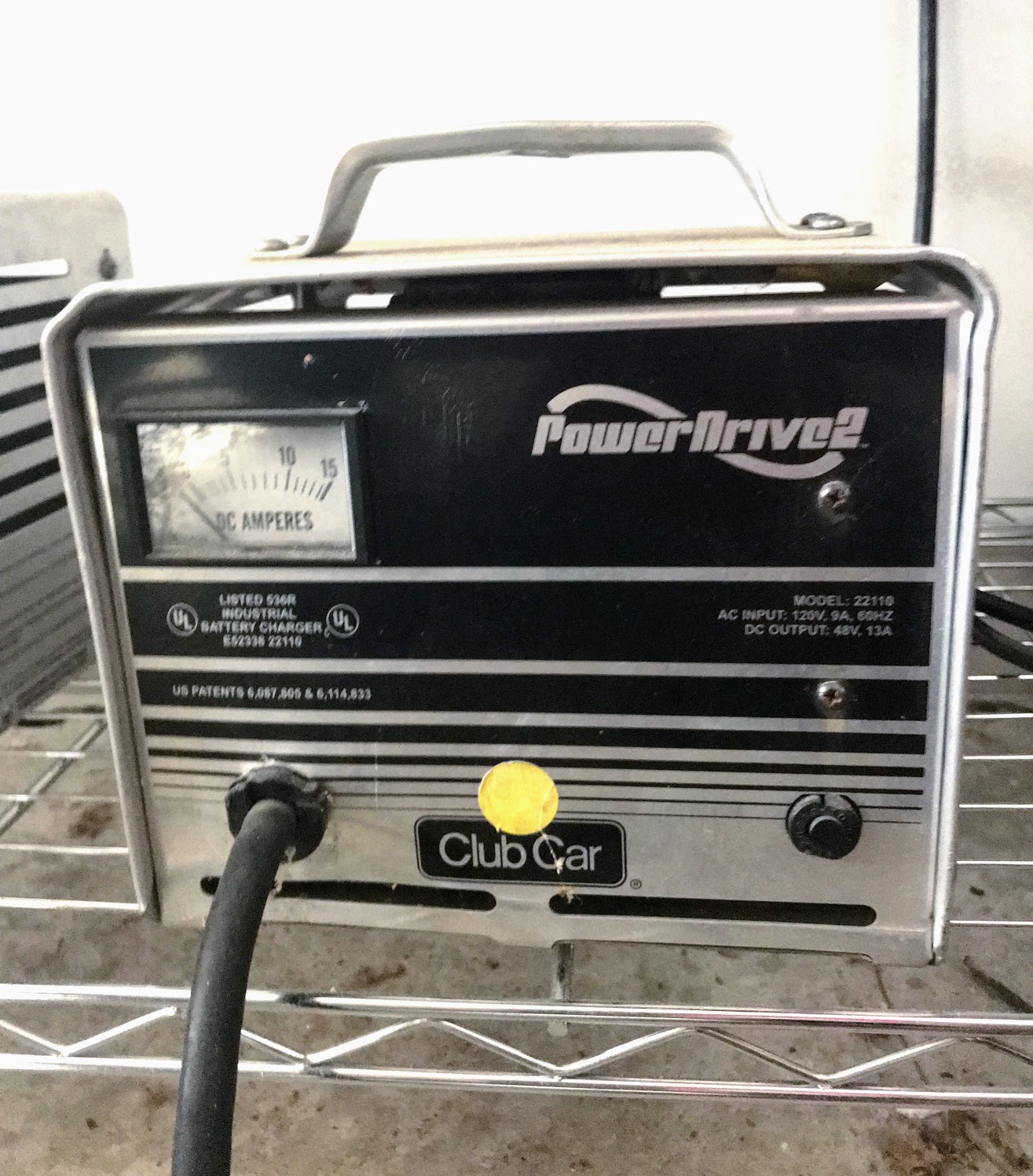
Chargers stop working for many reasons. Some are simple. Others need tools or a pro. Common causes include bad cables, blown fuses, corroded terminals, or worn battery cells. Understanding these causes makes Club Car 48 Volt Battery Charger Troubleshooting faster and safer.
Safety steps and tools before you begin
Safety first. Always wear eye protection and gloves. Turn the cart off and disconnect the main battery cable when possible. Use these tools:
- Multimeter for voltage and continuity checks
- Insulated wrenches or pliers for battery terminals
- Battery hydrometer for flooded cells
- Replacement fuses and terminal cleaner
When you follow safety rules, Club Car 48 Volt Battery Charger Troubleshooting is straightforward and low risk.
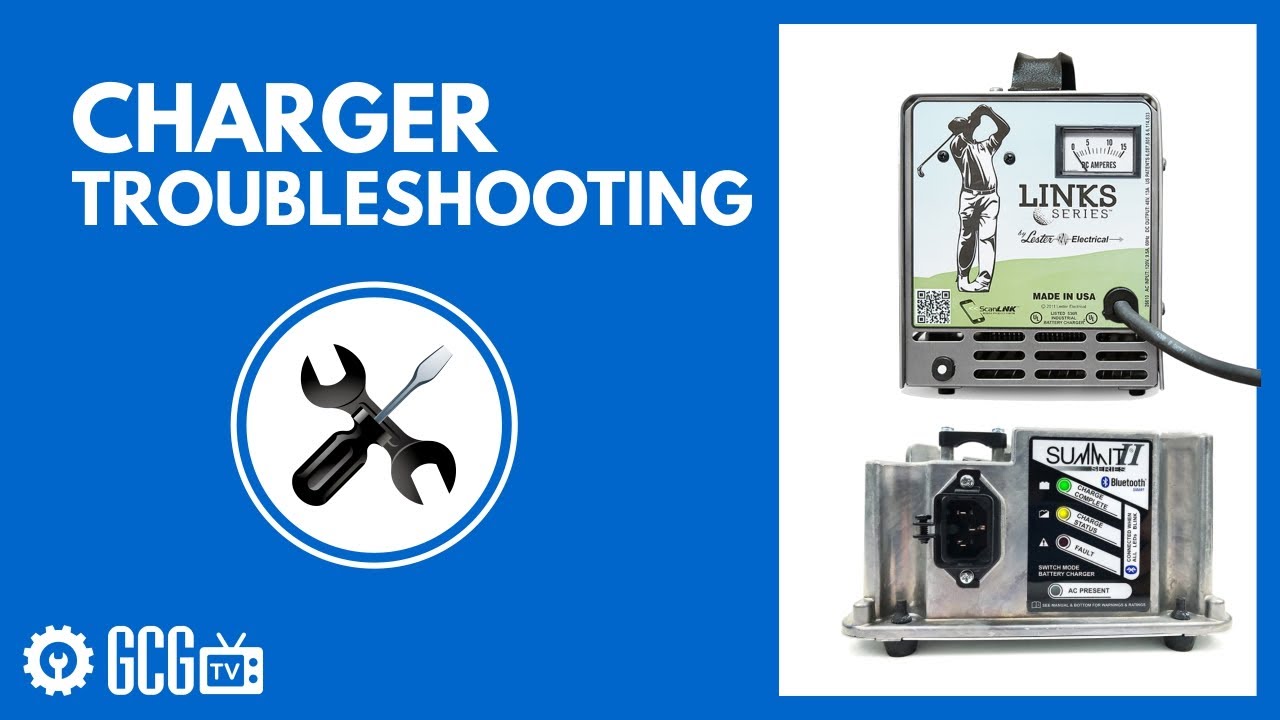
Step-by-step Club Car 48 Volt Battery Charger Troubleshooting checklist
Start with the basics. Work through this list. Mark each step as you go.
-
Visual inspection
- Look for frayed cords, melted insulation, or water damage.
- Check charger LEDs or status lights. Note colors or blink patterns.
- Inspect battery terminals for corrosion or loose cables.
-
Check AC power and outlet
- Verify the outlet supplies power with a tester. Try another outlet.
- Confirm any AC breaker or fuse feeding the charger is good.
-
Confirm charger connection
- Ensure the charger plug is fully seated on the cart port.
- Check charge port pins for dirt or bent pins.
-
Measure charger output at the plug
- Set the multimeter to DC volts.
- With charger connected and powered, measure at the charger plug. A healthy 48V charger should show around 54–58V when active.
- No output means charger electronics or fuse issue.
-
Test battery pack voltage
- Disconnect charger. Measure battery pack voltage at the main posts.
- A fully charged 48V pack reads about 52–54V (lead-acid). A deeply discharged pack may read below 40V.
-
Check individual battery voltages
- Test each 8V or 12V battery. Look for one much lower than the rest. A single bad cell will ruin charging.
- Replace any battery underperforming by more than 0.5–1.0V compared to others.
-
Inspect fuses and contactors
- Check the charger fuse and the cart’s main fuse.
- Clean contactor contacts and test for continuity. A stuck contactor can prevent charging.
-
Run a soak or load test
- After charging, run the cart on a short drive. See if voltage drops quickly.
- Rapid drop suggests weak batteries, not the charger.
Follow these steps for consistent Club Car 48 Volt Battery Charger Troubleshooting. If a step points to bad batteries, replace them before fixing charger electronics.
Quick PAA-style checks
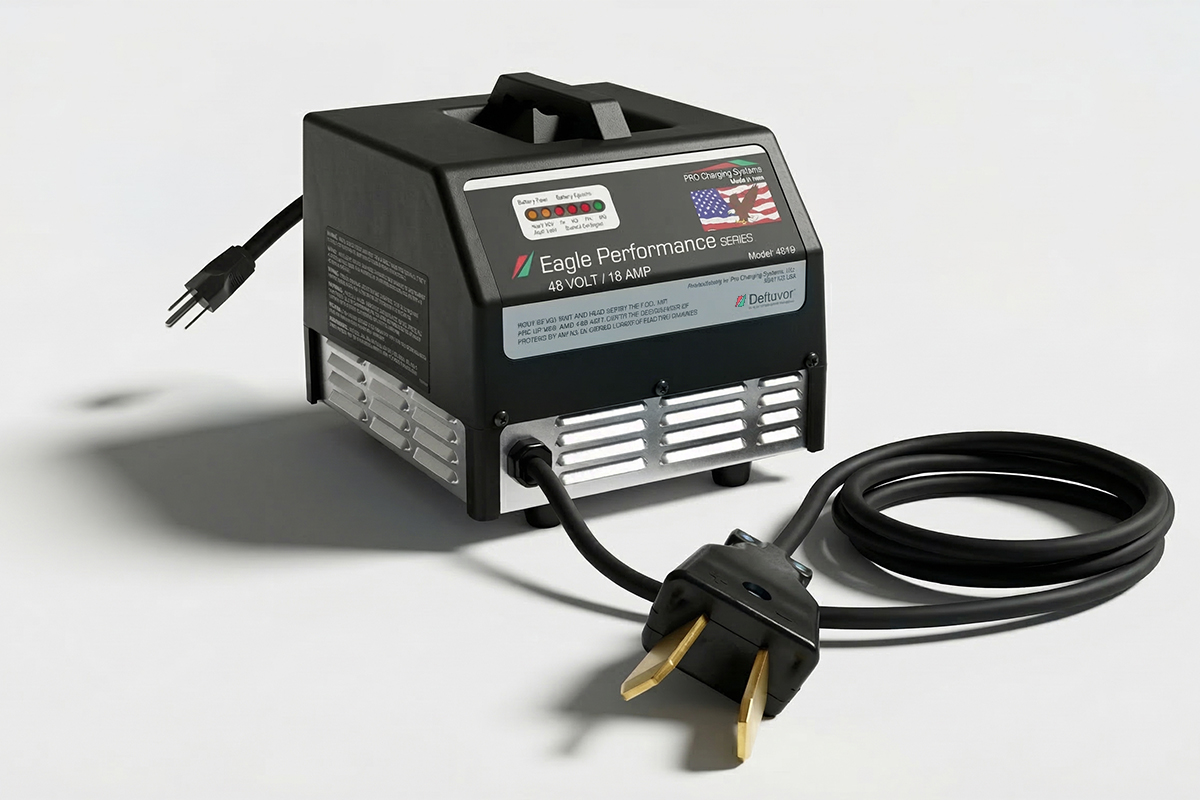
Q: Why does the charger light blink?
A: Blink codes usually mean an error. Check the manual for exact flashes. Common causes are low voltage, temperature fault, or blocked airflow.
Q: How long should charging take?
A: Typical full charging takes 6–8 hours on a slow charger. Fast chargers can be 2–4 hours depending on amp rating.
Q: Can a bad battery stop the charger from powering on?
A: Yes. Many chargers detect pack voltage and shut down if cells are too low or shorted.

Advanced diagnostics and tests
If basics don’t fix it, move to deeper tests. These require care and some experience.
-
Test charger under load
- Use a controlled load or connect to batteries and measure current draw.
- No current while voltage is present suggests internal charger faults.
-
Check isolation and safety circuits
- Some chargers have temperature sensors or ground-fault protection.
- Disconnect sensors only if you know what you are doing.
-
Inspect internal components (only if qualified)
- Look for burned components, swollen capacitors, or bad solder joints.
- Replace boards or modules as needed.
-
Use an amp clamp
- Measure charge current. A healthy charger will deliver rated amps when batteries accept charge.
- Zero amps with correct voltage points to internal regulation faults.
In my shop, I once fixed a charger by replacing a failed relay. I had to trace a dead LED to a bad solder joint. Small parts can cause big failures. Keep records of voltages and readings during Club Car 48 Volt Battery Charger Troubleshooting.

Maintenance and prevention for long life
Preventive care avoids many problems. Do these tasks regularly.
-
Clean terminals and connectors
- Use a brush and baking soda solution for corrosion.
- Coat terminals with protector after cleaning.
-
Keep batteries watered (if flooded)
- Maintain correct electrolyte levels. Never overfill.
- Equalize periodically if recommended.
-
Inspect charging area
- Ensure good ventilation for the charger.
- Keep the charger dry and free of debris.
-
Replace weak batteries early
- Replacing one weak battery prevents stress on the rest.
- A balanced pack charges reliably.
I learned that simple cleaning and tightening cuts most repeat service calls. Good maintenance minimizes the need for Club Car 48 Volt Battery Charger Troubleshooting.
When to replace the charger or call a pro
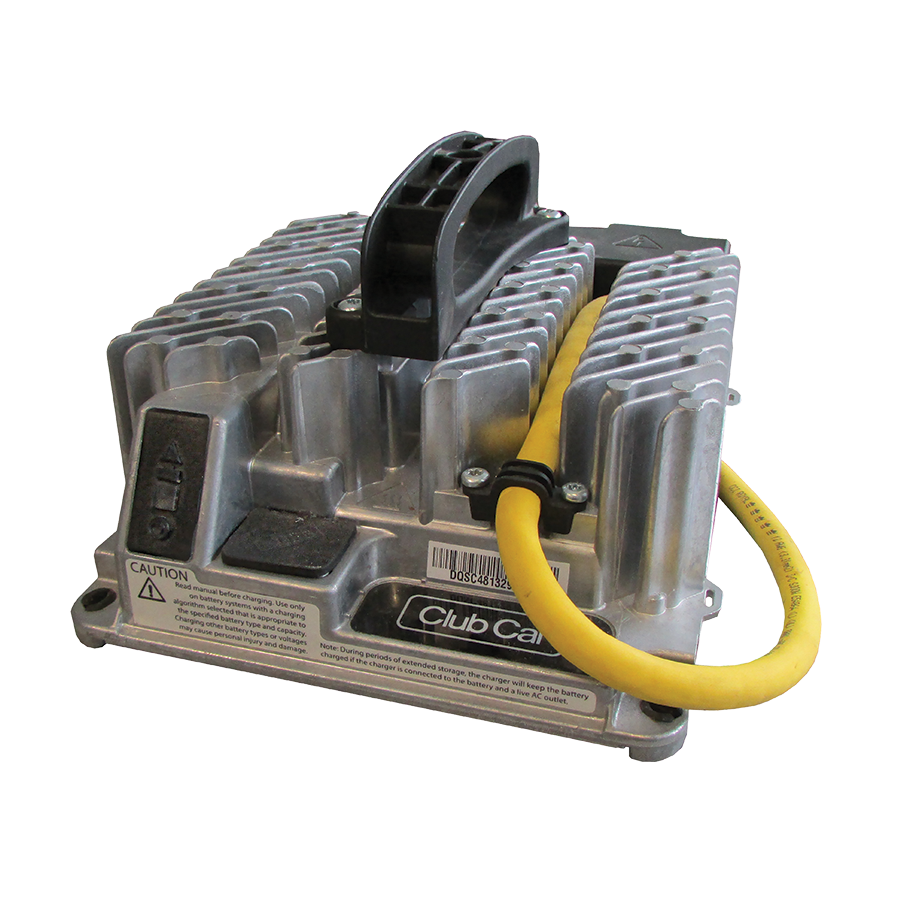
Know when to stop and call an expert. Replace or seek help if:
- The charger shows no output after basic checks.
- Internal components show burn damage.
- You lack tools or confidence for high-voltage work.
- Multiple diagnostics point to a failed internal regulator.
A professional can bench-test the charger safely. If batteries are old, replacing them may be more cost-effective than repairing the charger. Use warranty and OEM support when possible. Getting help can save time and money during Club Car 48 Volt Battery Charger Troubleshooting.

Frequently Asked Questions of Club Car 48 Volt Battery Charger Troubleshooting
Why won’t my Club Car 48V charger turn on?
Check the AC power, outlet, and circuit breaker. Inspect the charger cord and fuse. If AC is present but no charger power, the charger likely needs repair or replacement.
How can I tell if the batteries or charger is bad?
Measure battery pack voltage and each battery. If batteries read low and drop fast under load, the batteries are bad. If batteries are good but charger shows no output, the charger is at fault.
What does a flashing red or green light mean?
Flash codes vary by model. Often flashing means an error or charging in progress. Consult the charger label or manual for exact meanings.
Is it safe to jump-start or boost a 48V pack?
No. Do not attempt to jump-start a 48V pack with a car battery. It is dangerous and can damage electronics. Use proper charger or professional service.
How often should I check battery water and terminals?
Check water levels monthly for flooded batteries and clean terminals every 3 months. Regular checks reduce the need for troubleshooting and extend life.
Conclusion
You can fix many Club Car 48 Volt Battery Charger Troubleshooting issues with basic tools and safe steps. Start with visual checks, test power and voltages, and inspect batteries. Replace weak batteries and keep terminals clean. If the charger shows no output or internal damage, get professional help.
Take action today. Use the checklist above to diagnose your charger. Leave a comment with your symptoms or subscribe for more repair guides.

