

Quick fix steps can resolve most Genie garage door opener issues fast and safely.
I have spent years repairing and testing residential garage systems. This guide on Genie Garage Door Opener Troubleshooting brings clear, proven steps, safety tips, and real examples so you can diagnose and fix problems faster. Read on for a practical, step-by-step approach backed by hands-on experience and common-sense safety.

36% off Today’s Exclusive Deals
Limited-time Exclusive Deals. Check current discount on Amazon.
Check Price on Amazon As an Amazon Associate I earn from qualifying purchases.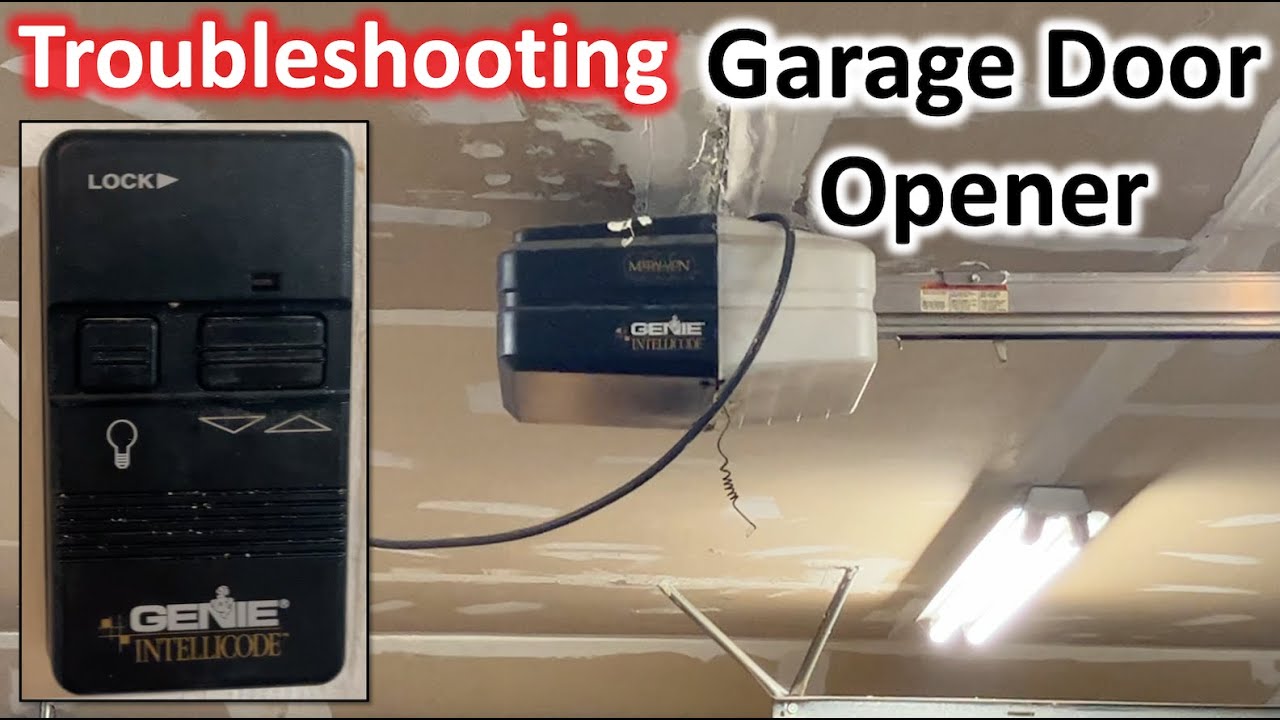
Common symptoms and causes
If your garage door acts up, start by spotting the symptom. Common signs include the door not moving, stopping mid-cycle, reversing suddenly, grinding noises, or remote control failures. These symptoms often point to a few repeat causes: misaligned sensors, weak remotes or batteries, worn drive belts or gears, limit switch errors, or wiring faults.
Genie Garage Door Opener Troubleshooting begins by matching a symptom to likely causes. For example, a door that reverses immediately usually means a safety sensor misalignment or obstruction. A unit that hums but doesn’t move often has a stripped gear or bad motor capacitor.
I always check sensors first. They are simple to clean and realign, and they fix many issues quickly. Keep a notepad and log what you test; patterns help you find hidden faults.

Step-by-step Genie Garage Door Opener Troubleshooting checklist
Follow these steps in order to save time and stay safe:
-
Safety first
- Disconnect power before touching internal parts.
- Close the door or secure it with clamps on the track to prevent sudden movement.
- Keep kids and pets away while you work.
-
Visual inspection
- Look for bent tracks, loose bolts, or broken springs.
- Check the opener for obvious damage, oil leaks, or burned smells.
-
Test the remote and wall switch
- Replace remote batteries and test from close range.
- Try the wall switch; if it works the remote may be the issue.
-
Check safety sensors
- Ensure both sensors are aligned and the indicator LEDs are lit.
- Clean lenses with a soft cloth and remove any objects blocking the beam.
-
Observe travel and force settings
- Run the opener and watch travel limits. If the door stops too soon or slams, adjust the limit screws per the manual.
- Reduce force settings before testing to avoid damage.
-
Listen for motor/gear noise
- Grinding or clicking can mean worn gears or stripped nylon sprockets.
- If the motor hums but doesn’t engage, test the capacitor and drive gear.
-
Inspect belt/chain/drive
- Look for slack, wear, or broken links.
- Tighten chain/belt to manufacturer specs; do not overtighten.
-
Check wiring and connections
- Inspect low-voltage wires to sensors, wall switch, and motor for breaks or corrosion.
- Reseat loose plugs and terminals.
-
Test safety reversal
- Place a board on the floor in the door path. If the door doesn’t reverse on contact, stop and fix immediately.
-
Factory reset and diagnostics
* Use the Genie opener’s diagnostic LED codes or display to read errors.
- If settings seem corrupt, follow the manual to reset and reprogram.
Following this checklist will resolve most issues. Keep a simple toolkit and a few spare parts like remotes and batteries on hand.

People also ask
Why won’t my Genie opener respond to the remote?
Often the remote needs a battery, or it lost programming. Try replacing the battery and reprogramming the remote following the opener’s steps.
What causes the door to reverse after closing?
A misaligned safety sensor or incorrect force setting usually causes reversal. Clean and realign sensors, then fine-tune force settings.

Tools and parts you’ll need
Prepare these items to streamline Genie Garage Door Opener Troubleshooting:
- Phillips and flat screwdrivers
- Adjustable wrench and socket set
- Multimeter for voltage and continuity checks
- Replacement batteries for remotes
- Spare photo-eye sensors or sensor brackets
- Nylon or metal gears (model-specific) and drive sprockets
- Suction clamps or locking pliers to hold the door
- Ladder, gloves, and eye protection
Having the right tool cuts repair time and lowers risk. I keep a small parts bag for common Genie models; it saves trips to the store.

Advanced diagnostics and when to call a pro
Some problems need deeper knowledge or special tools. Call a professional if you see any of these:
- Broken torsion or extension springs
- Bent or damaged track needing realignment
- Motor failure or burnt smells from the opener
- Complex wiring faults or intermittent board issues
- Repeated failures after basic troubleshooting
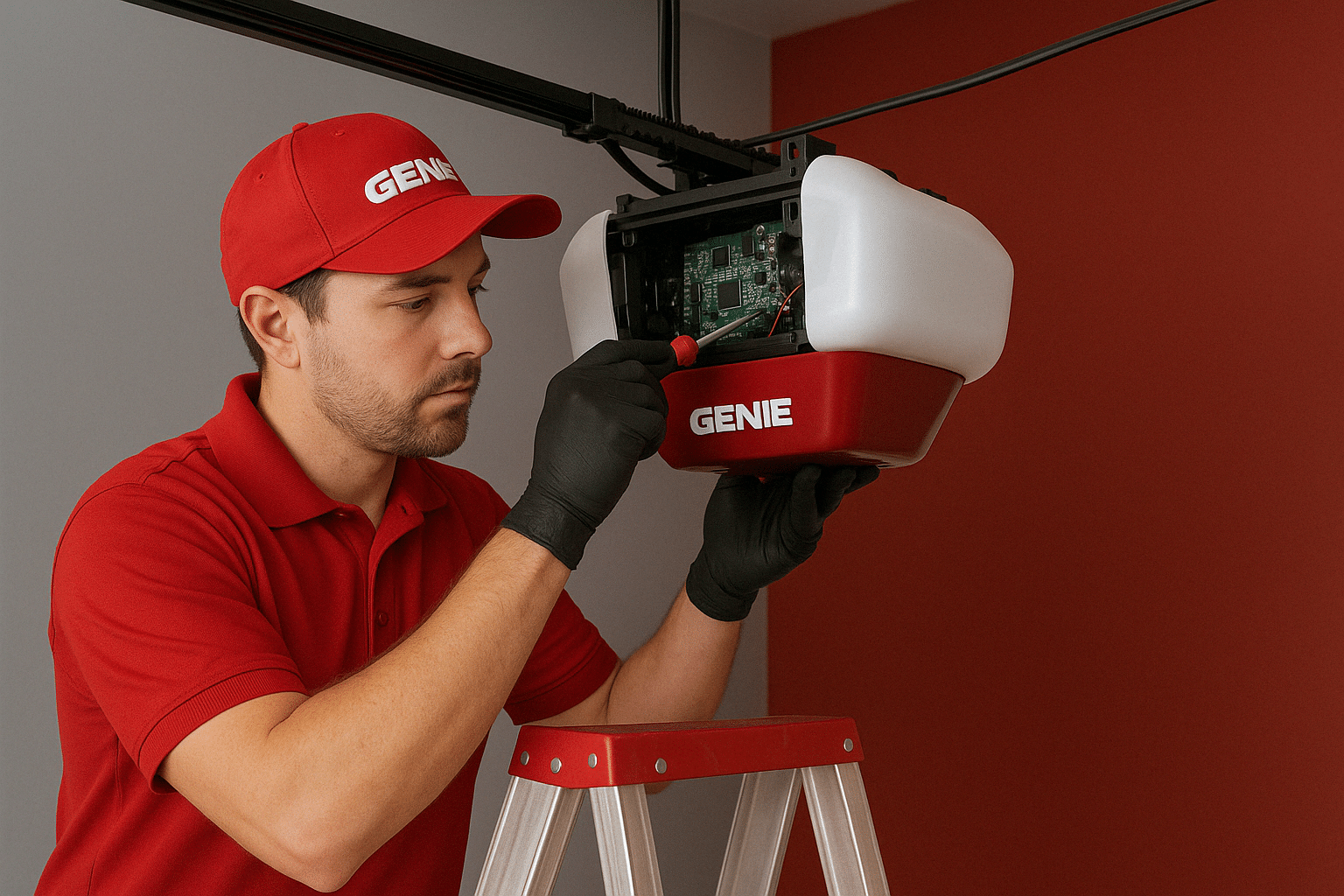
Advanced checks include testing motor current draw, replacing capacitors, and board-level diagnostics. These can be hazardous and may void warranties if done incorrectly. I once tried to adjust a torsion spring myself and nearly lost control of the door; after that I hire a pro for spring work.
When you call a repair service, note model numbers and the exact symptoms. That saves time and may lower service costs.
Preventive maintenance and best practices
A little care prevents many breakdowns. Do these every 6 months:
- Lubricate rollers, hinges, and the opener chain or screw with the right lubricant.
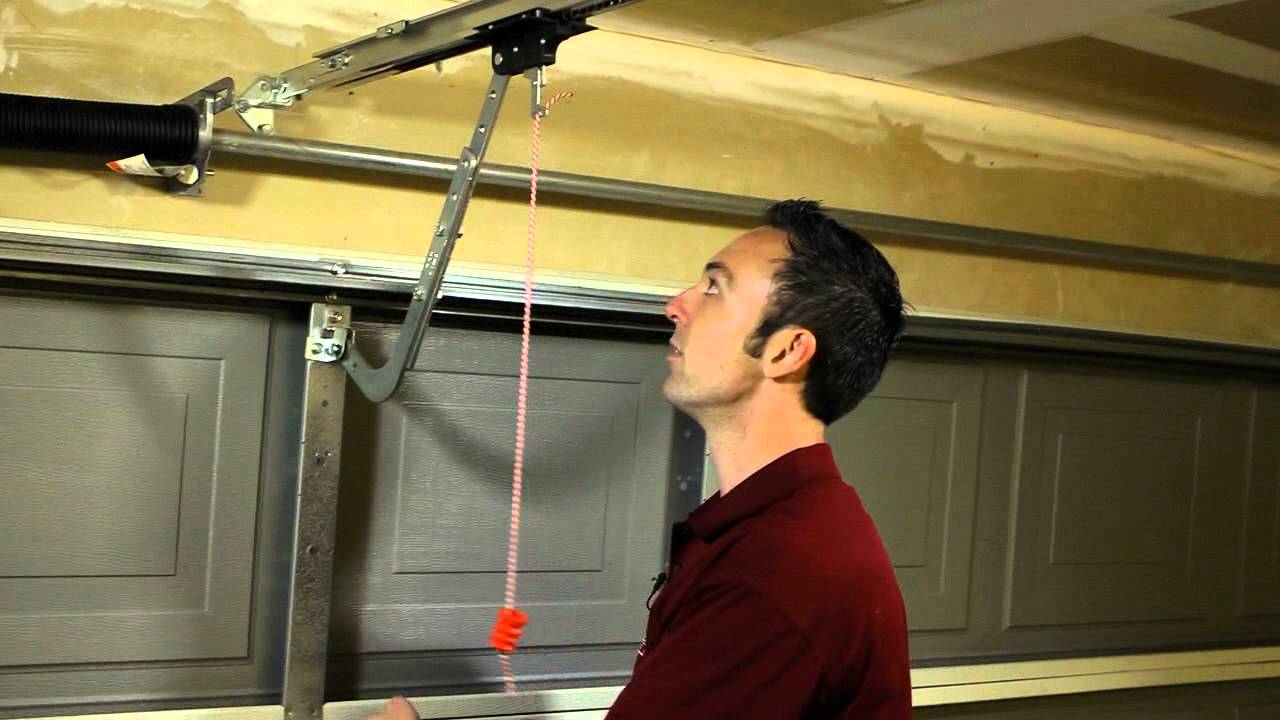
- Tighten hardware and check balance by disconnecting the opener and moving the door by hand.
- Test sensor alignment and clean lenses.
- Replace old remotes and batteries.
- Keep the area clear and inspect for rust or wear.
Regular checks reduce the need for emergency Genie Garage Door Opener Troubleshooting. I schedule a quick inspection each season to catch wear early.
Troubleshooting examples and personal experiences
Example 1: Door won’t close, sensors lit
I found the sensor wire chewed by rodents. After replacing and securing the wire, the door worked. Lesson: check wiring runs for damage.
Example 2: Opener hums but won’t lift
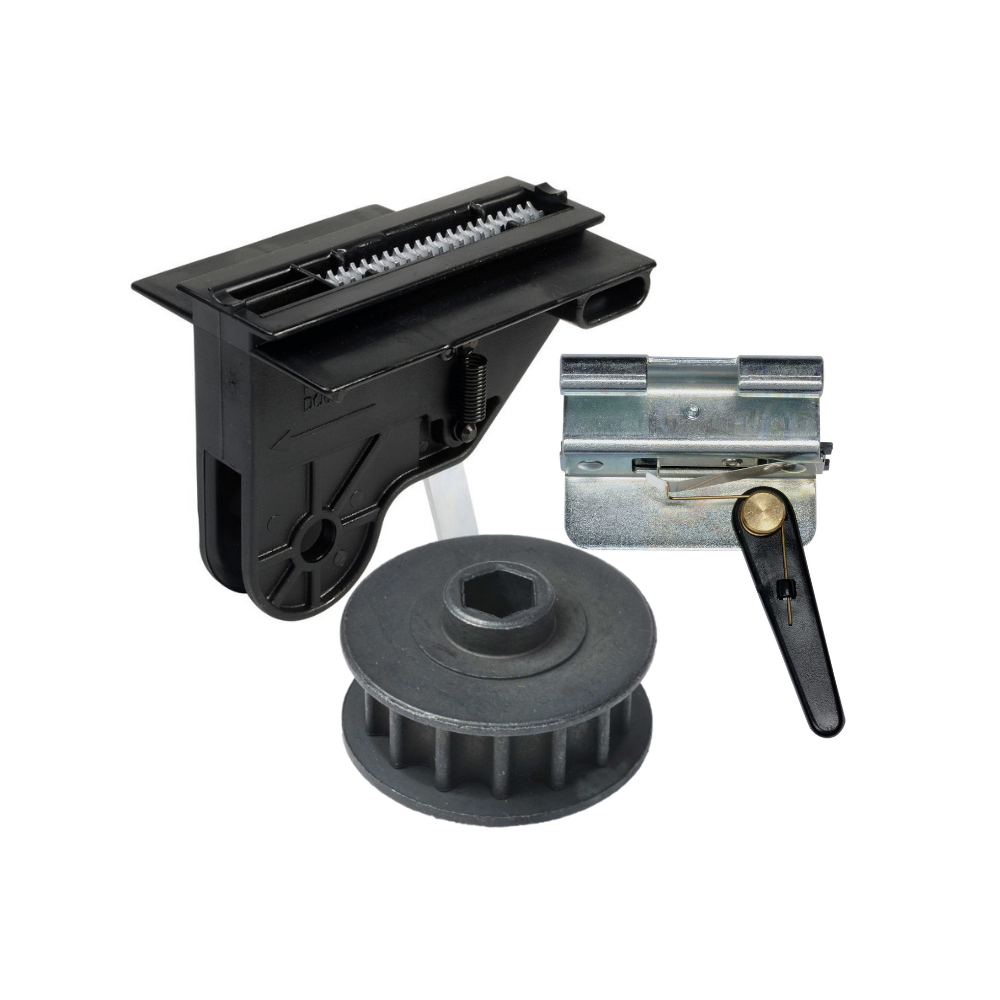
A stripped drive gear was the culprit. Replacing the gear fixed it. Lesson: long-use parts fail; have model-specific parts ready.
Example 3: Intermittent remote operation
Dirty remote contacts caused bad signals. Cleaning the switch inside the remote solved the issue. Lesson: small parts matter.
These real fixes show how quick checks solve many problems. Keep notes of past repairs; patterns help predict future trouble.
Frequently Asked Questions of Genie Garage Door Opener Troubleshooting
How do I reset my Genie garage door opener?
To reset, unplug the opener, wait 60 seconds, then plug it back in. Follow the model’s manual for reprogramming remotes and limit settings.
Why does my Genie opener make loud noise during travel?
Loud noise often comes from worn gears, loose hardware, or an unlubricated drive. Inspect moving parts, tighten bolts, and lubricate recommended points.
What if the safety sensors look aligned but the door still won’t close?
Clean the lenses, check for wiring breaks, and verify the LED status on each sensor. If LEDs are off or blinking, replace the sensor or wiring.
Can I replace a torsion spring myself?
No. Torsion springs store high energy and can cause severe injury. Hire a trained technician to replace springs safely.
How often should I lubricate and inspect my opener?
Do a basic inspection and lubrication every six months. More frequent checks help if you use the door many times each day.
Conclusion
You can solve many problems with a simple, safe approach. Use the Genie Garage Door Opener Troubleshooting checklist, keep basic tools ready, and know when to call a pro. Start with sensors, remotes, and visual checks, and move to advanced fixes only when needed. Take action: inspect your opener today, make small repairs, and save time and cost later. Leave a comment with your issue or subscribe for more repair tips.

