

Kenmore Coldspot Ice Maker Troubleshooting: A Complete Guide
The Kenmore Coldspot refrigerator has been a trusted appliance in many homes for years. One of its most appreciated features is the built-in ice maker, which adds convenience to daily life. But what happens when the ice maker stops working properly? Whether you’re getting no ice, too little ice, or cubes that are misshapen, it can quickly become frustrating. Luckily, most ice maker problems are easy to diagnose and fix, especially with a bit of guidance.
This article is your comprehensive guide to Kenmore Coldspot ice maker troubleshooting. You’ll learn how the ice maker works, common issues and their solutions, and when it’s time to call a professional. Even if you’re not a technical expert, you’ll find clear steps, practical tips, and real-world examples to help you get your ice maker running smoothly again.

36% off Today’s Exclusive Deals
Limited-time Exclusive Deals. Check current discount on Amazon.
Check Price on Amazon As an Amazon Associate I earn from qualifying purchases.How The Kenmore Coldspot Ice Maker Works
Understanding the basics of your ice maker helps you solve problems more confidently. The Kenmore Coldspot ice maker uses a simple but reliable system:
- Water flows into a small tray inside the freezer.
- The tray freezes the water into cubes.
- A motor rotates, pushing cubes out into the ice bin.
- The cycle repeats as long as the ice bin isn’t full.
A thermostat detects when the cubes are ready, and an arm sensor (or sometimes an optical sensor) tells the machine when to stop making ice. If any part of this process fails, you may notice issues with ice production.
Quick Troubleshooting Checklist
Before diving into complex repairs, check these simple fixes. Many ice maker problems are caused by basic issues:
- Is the ice maker turned on? Some models have an ON/OFF switch or a lever arm. Make sure it’s set to ON.
- Is the freezer cold enough? The ice maker only works if the freezer is below 15°F (-9°C). Ideal is 0°F (-18°C).
- Is the water supply connected? Check the water line at the back of the fridge for kinks or leaks.
- Is the water filter clogged? A dirty filter reduces water flow. Replace it every 6 months.
- Is the ice bin in place? If the bin isn’t seated correctly, the ice maker may not run.
If these simple checks don’t fix the problem, it’s time to look at more specific issues.
Common Kenmore Coldspot Ice Maker Problems And Solutions
Kenmore Coldspot ice makers can experience a range of issues. Here’s how to identify and solve the most common ones.
Ice Maker Not Making Any Ice
When you open the freezer and find the bin empty, it’s usually one of these causes:
- Freezer temperature is too high. Use a thermometer to check. Adjust the setting if needed.
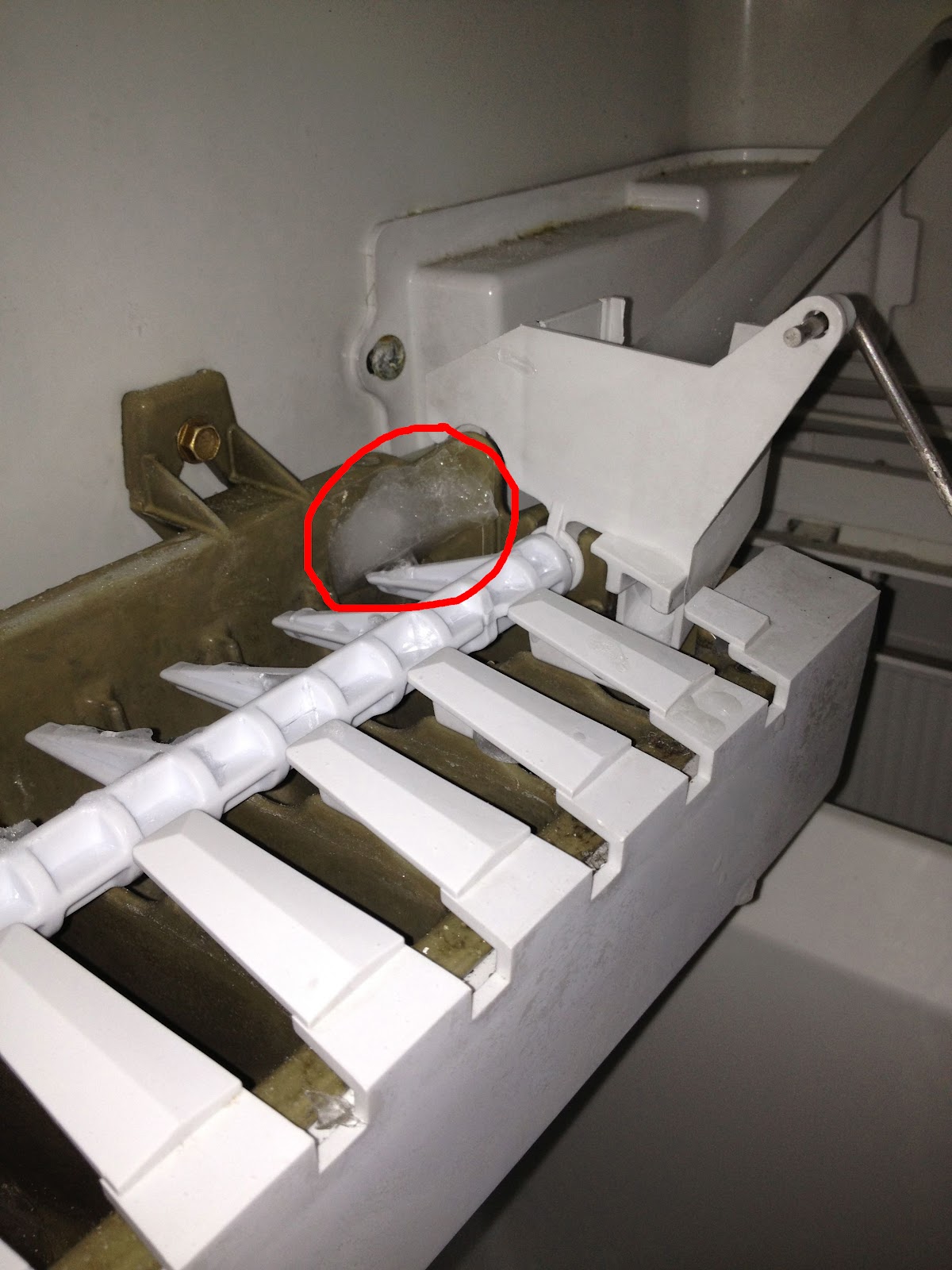
- Water line is blocked or frozen. Carefully inspect the water line behind the fridge. If it’s frozen, thaw it with a hair dryer (unplug the fridge first).
- Ice maker switch is off. Check the lever arm or switch.
- Faulty water inlet valve. This valve controls water flow to the ice maker. If it’s broken, water can’t enter the tray.
- Defective ice maker module. The module is the “brain” of the ice maker. If all else fails, it may need replacement.
Ice Maker Makes Too Little Ice
If you’re only getting a few cubes, try these steps:
- Check water filter. Replace if older than 6 months.
- Low water pressure. Make sure your home’s water pressure is above 20 psi. If it’s lower, the ice maker won’t fill properly.
- Partial block in water line. Even a small kink can slow water flow.
Ice Cubes Are Small Or Hollow
Small or hollow cubes often mean insufficient water in the tray:
- Replace water filter. This is the most common fix.
- Check for clogs. Remove the ice maker and check for mineral buildup in the water line.
- Adjust water fill. Some Kenmore models let you adjust the fill time via a screw on the ice maker head. Add 1-2 seconds for larger cubes.
Ice Maker Is Leaking Water
Water leaks inside the freezer or from the back of the fridge are serious and need quick attention:
- Check water connections. Tighten any loose fittings behind the fridge.
- Inspect the ice maker tray. Cracks or damage mean it must be replaced.
- Water valve stuck open. If water keeps coming in, the valve may be faulty.
Ice Maker Is Noisy
A little noise is normal, but loud grinding or banging is not:
- Ice jammed in mechanism. Remove the ice bin and clear any stuck cubes.
- Motor or gear failure. If the noise continues, the motor may be worn out.
Step-by-step Troubleshooting: Fixing The Most Common Issues
Let’s walk through how to fix the most frequent Kenmore Coldspot ice maker problems, with practical steps and tips.
1. Checking The Freezer Temperature
A freezer that’s too warm or too cold causes many ice maker issues. Use a simple thermometer to check:
- Place the thermometer inside the freezer for at least 30 minutes.
- Ideal temperature: 0°F (-18°C)
- If it’s above 15°F (-9°C), lower the thermostat and wait 24 hours.
2. Inspecting The Water Supply Line
A blocked or frozen line is a common culprit:
- Pull the fridge out from the wall.
- Locate the thin water line (often plastic or copper).
- Check for kinks, leaks, or ice buildup.
- If frozen, unplug the fridge and use a hair dryer to thaw (never use open flame).
3. Replacing The Water Filter
A clogged filter reduces both ice production and water quality:
- Find the filter, usually inside the fridge compartment or at the base.
- Twist or push to remove, depending on your model.
- Install a new, genuine Kenmore filter.
- Flush the system by running water through the dispenser for 2-3 minutes.
4. Testing The Water Inlet Valve
This valve is located at the back of the fridge, where the water line enters:
- Unplug the fridge.
- Remove the rear panel.
- Locate the valve (a small device with wires and water connections).
- Listen for a “click” when the ice maker cycles. If silent, use a multimeter to test for continuity.
- Replace if faulty.
5. Resetting The Ice Maker
Many Kenmore Coldspot ice makers can be reset:
- Turn off the ice maker using the switch or lever.
- Wait 5 minutes, then turn it back on.
- Some models have a “reset” button—press and hold for 10 seconds.
6. Cleaning The Ice Maker
Mineral deposits and mold can block moving parts:
- Remove the ice bin and ice maker assembly (check your manual).
- Wash with warm, soapy water.
- Use a toothbrush to scrub mineral buildup.
- Rinse and dry fully before reinstalling.
7. Adjusting The Ice Maker Arm
The metal arm or plastic paddle tells the ice maker when to stop:
- If stuck up, gently push it down.
- If broken or loose, replace the arm.
8. Checking The Ice Maker Module
The module is the control board for the ice maker:
- Remove the front cover of the ice maker.
- Inspect for burned or damaged spots.
- Use a multimeter to test for power (if comfortable).
- Replace if defective.
9. Unclogging The Water Fill Tube
Ice can block the fill tube, stopping water from reaching the tray:
- Remove the tube (usually a small plastic pipe leading into the tray).
- Use warm water or a turkey baster to melt any ice inside.
10. Testing Home Water Pressure
Low water pressure is a hidden cause of many ice problems. Here’s how to check:
- Turn off the water supply to the fridge.
- Disconnect the water line at the back.
- Hold the line over a bucket and turn on the supply.
- Strong, steady flow = good pressure. Weak trickle = call a plumber.
Kenmore Coldspot Ice Maker Error Codes
Some newer Kenmore models display error codes to help you diagnose problems faster. Here’s a quick reference:
| Error Code | Meaning | Recommended Action |
|---|---|---|
| E0 | No errors detected | Normal operation |
| E1 | Ice maker sensor fault | Check sensor connection, replace if needed |
| E2 | Ice maker motor lost home position | Reset ice maker, replace motor if problem continues |
| E3 | Heater failed | Replace ice maker heater |
| E4 | Water supply issue | Check water line and inlet valve |
If your model shows an error code, always check the owner’s manual for exact meanings and instructions.
Comparing Diy And Professional Repairs
Should you fix your ice maker yourself or call a pro? Here’s a side-by-side look at the pros and cons:
| DIY Repair | Professional Repair |
|---|---|
| Lower cost | Expert knowledge |
| Learn new skills | Guaranteed results |
| Parts may be hard to find | More expensive |
| May take longer | Usually faster |
| Risk of mistakes | Less risk of damage |
If your ice maker is under warranty, or if you’re not comfortable with electricity or plumbing, a professional is the safest choice.
Essential Tools For Ice Maker Troubleshooting
Having the right tools makes fixing your Kenmore Coldspot ice maker much easier. Here’s what you’ll need:
- Screwdrivers (Phillips and flathead)
- Multimeter for electrical testing
- Small flashlight for seeing inside the freezer
- Needle-nose pliers
- Turkey baster or squeeze bottle (for thawing tubes)
- Clean cloths and mild soap
Most problems can be solved with these basic tools. For more advanced repairs, you might need a nut driver or socket set.
Common Mistakes To Avoid
Even experienced DIYers can make mistakes. Here are some errors to watch out for:
- Forgetting to unplug the fridge. Always cut power before working.
- Using the wrong replacement parts. Only use genuine Kenmore or compatible parts.
- Skipping the filter change. Old filters cause many ice problems.
- Not checking the freezer temperature. Even a few degrees too warm can stop ice production.
- Ignoring small leaks. Water leaks can cause bigger problems like mold or damage.
A non-obvious insight: sometimes, ice makers stop working after a power outage. Try resetting the unit before taking it apart.
When To Replace Instead Of Repair
Some ice maker problems are simply not worth repairing, especially in older refrigerators. Consider replacement if:
- The ice maker is over 10 years old
- The same problem keeps coming back
- The cost of repair is more than half the price of a new unit
- There is visible rust, cracks, or electrical burns
A new Kenmore Coldspot ice maker is often more efficient and less likely to break again. You can find compatible replacements at appliance stores or through Kenmore’s official website.
Ice Maker Maintenance Tips
Regular maintenance prevents most ice maker problems. Here’s how to keep your Kenmore Coldspot running smoothly:
- Change the water filter every 6 months.
- Clean the ice bin and maker every 3 months. Use warm water and mild soap.
- Check the water supply line for leaks or kinks.
- Keep the freezer full but not overcrowded. This helps maintain a steady temperature.
- Listen for unusual noises. Early sounds can warn you of a problem before it gets worse.
An insider tip: Use a surge protector for your fridge. Power surges can damage the ice maker’s electronics.
Real-world Examples
Let’s look at two typical cases:
Case 1: Karen noticed her Kenmore Coldspot wasn’t making ice. She checked the water line and found it kinked behind the fridge. She straightened the line and ice production returned to normal within hours.
Case 2: Mike’s ice cubes were coming out small and hollow. He replaced the water filter and adjusted the freezer temperature to 0°F. Within a day, his ice cubes were back to their normal size.
Many problems have simple solutions if you know what to look for.
How To Find Your Kenmore Coldspot Model Number
Knowing your exact model helps when ordering parts or finding instructions. Look for a sticker:
- Inside the fridge (side wall or ceiling)
- Behind the lower kick plate
- On the back of the refrigerator
Write down the full model number (e.g., 106.53702202) before buying parts or searching for manuals.
Where To Find Replacement Parts
Only use genuine Kenmore parts or high-quality compatibles. You can buy from:
- Kenmore’s official website
- Local appliance parts stores
- Online marketplaces (double-check compatibility)
- Appliance repair shops
Never use cheap, off-brand parts—they may not fit or could damage your fridge.
Energy Efficiency And Your Ice Maker
A faulty ice maker can waste energy. For example:
- A leaking valve can cause the freezer to run more often.
- Frost buildup from leaks makes the compressor work harder.
- Poor seals let cold air escape, raising energy bills.
Fixing ice maker problems not only gives you more ice—it also saves money on electricity.
Troubleshooting Recap Table
Here’s a quick-reference summary for Kenmore Coldspot ice maker troubleshooting:
| Problem | Likely Cause | Quick Fix |
|---|---|---|
| No ice produced | Water line blocked, switch off, high freezer temp | Check water line, turn on, set temp to 0°F |
| Small or hollow cubes | Low water flow, clogged filter | Replace filter, check water pressure |
| Water leak | Cracked tray, loose connections | Replace tray, tighten fittings |
| Ice maker noisy | Ice jam, bad motor | Remove jam, replace motor if needed |
| Slow ice production | Dirty filter, warm freezer | Change filter, lower temp |
Additional Resources
If you need more help, check out the Kenmore support page or user forums. Many users share tips and repair stories that can help you solve unique issues. For comprehensive technical data, visit the official Sears PartsDirect site.
Frequently Asked Questions
Why Is My Kenmore Coldspot Ice Maker Making Clicking Noises But Not Producing Ice?
Clicking often means the ice maker is trying to cycle but is stuck. The most common causes are ice jams in the ejector arm or a faulty motor. Unplug the fridge and check for stuck ice cubes. If the noise continues, the motor module may need replacement.
How Do I Reset My Kenmore Coldspot Ice Maker?
To reset, turn the ice maker off using the switch or lever. Wait 5 minutes, then turn it back on. If your model has a reset button, press and hold it for 10 seconds. This can solve many minor glitches after a power outage or filter change.
Can I Run The Ice Maker Without A Water Filter?
Some Kenmore Coldspot models have a bypass plug that allows operation without a filter. However, running without a filter can let in contaminants and may slow ice production. Always use a proper filter for the best results.
Why Are My Ice Cubes Cloudy Or Taste Bad?
Cloudy or bad-tasting ice is usually caused by old water filters, minerals in the water, or dirty ice bins. Replace the filter, clean the ice bin and tray, and run the first few batches of ice through and discard them to flush the system.
How Often Should I Clean My Kenmore Coldspot Ice Maker?
Clean the ice maker and bin every three months to prevent mold, mineral buildup, and bad tastes. Use warm water and mild soap, then rinse thoroughly. Regular cleaning keeps your ice safe and your machine working longer.
A working ice maker adds convenience to your home. With this guide, you can tackle most Kenmore Coldspot ice maker troubleshooting tasks yourself, saving money and time. If you’re ever in doubt, don’t hesitate to contact a professional—your safety comes first.

