

If your Ryobi pressure washer suddenly stops working or isn’t performing well, it can be frustrating—especially if you’re halfway through cleaning your driveway or car. While these machines are known for their dependability, like any equipment, they can run into problems. The good news: many issues can be fixed at home with a clear guide and a little patience. This manual walks you through practical steps to diagnose and solve the most common Ryobi pressure washer problems, helping you save money on repairs and get back to work faster.
You’ll find clear explanations, real-world examples, and useful tables comparing symptoms and solutions. Whether your machine won’t start, has low pressure, or leaks water, this guide will help you troubleshoot confidently—even if you’re not a technical expert.

36% off Today’s Exclusive Deals
Limited-time Exclusive Deals. Check current discount on Amazon.
Check Price on Amazon As an Amazon Associate I earn from qualifying purchases.Understanding Your Ryobi Pressure Washer
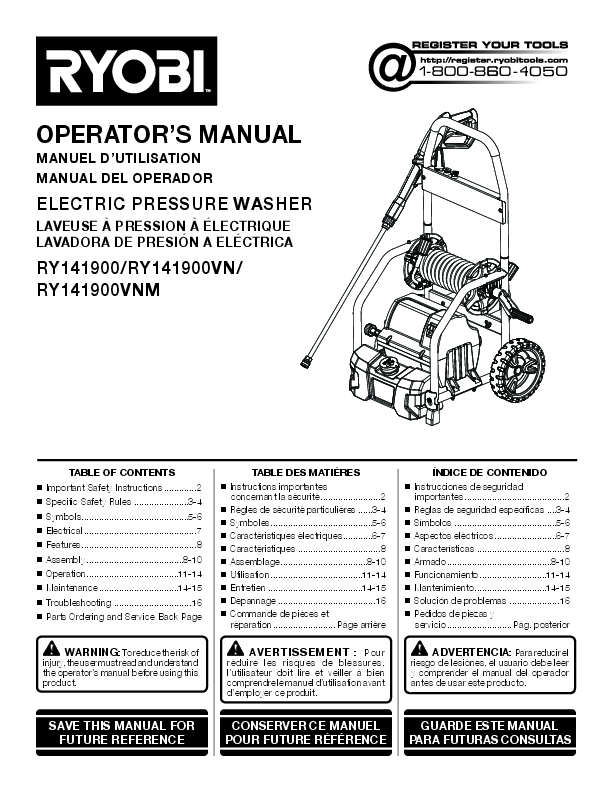
Before fixing problems, it helps to know the basics of how your pressure washer works. Ryobi offers both electric and gas-powered models. Both use water pressure to remove dirt, but their parts and troubleshooting steps can be different.
- Electric models are quieter, lighter, and start with a switch.
- Gas models are stronger, more portable, and start with a pull cord.
Key parts include:
- Pump: Increases water pressure.
- Motor/Engine: Powers the pump.
- Hose and Nozzle: Direct water where you need it.
- Trigger Gun: Controls water flow.
- Detergent Tank: Holds cleaning solutions.
Knowing your model type and main parts will make troubleshooting faster and safer.
Safety First: Preparing For Troubleshooting
Working with water and electricity (or gasoline) can be risky. Always:
- Turn off power to the washer (unplug electric or switch off gas engine).
- Disconnect water supply and relieve system pressure by squeezing the trigger after turning off the machine.
- Wear gloves and eye protection, especially when checking for leaks or cleaning nozzles.
Never open the pump or motor unless you’re experienced. For complex repairs, contact a professional or Ryobi support.
Common Problems And How To Fix Them
This section covers the most frequent issues users face. Each problem includes symptoms, causes, and step-by-step solutions.
Pressure Washer Won’t Start
This is one of the most common headaches. If your Ryobi won’t start, check the following:
Electric Models
- No power: Ensure the unit is plugged in and the outlet works. Try another device in the same outlet.
- Faulty extension cord: Use a heavy-duty extension cord rated for outdoor use (at least 12-gauge for most models).
- Tripped GFCI: Press the reset button on the plug.
- Loose connections: Secure all plugs and switches.
- Internal fuse blown: Some models have a fuse—consult your manual.
Gas Models
- No fuel: Fill the tank with fresh, clean gasoline.
- Old fuel: Drain and refill if fuel is older than a month.
- Choke not set: For cold starts, move the choke lever to “choke” position.
- Spark plug: Remove and clean or replace if dirty.
- Engine oil low: Some models won’t start if oil is too low.
Quick-check Table
| Symptom | Likely Cause | Solution |
|---|---|---|
| Electric won’t start | No power/GFCI tripped | Check outlet, reset GFCI, inspect cord |
| Gas won’t start | Old fuel/spark plug | Replace fuel, check spark plug |
| Engine turns but doesn’t run | Low oil/fuel valve off | Add oil, open fuel valve |
Tip: For gas models, avoid using fuel older than 30 days—it can cause hard starts.
Low Or No Water Pressure
If your Ryobi starts but delivers weak water, you won’t get good cleaning. Here’s how to fix it:
- Clogged nozzle: Turn off the machine. Remove the nozzle and poke out debris using a small tool (Ryobi includes a nozzle cleaning pin).
- Dirty inlet filter: Check the small filter where the hose connects. Rinse under running water.
- Water source issue: Confirm your outdoor tap is fully open and provides at least 20 PSI. Low flow means low pressure.
- Leaking hose: Inspect for cracks or loose fittings.
- Wrong nozzle tip: Use the correct nozzle for your cleaning task. A soap nozzle or a wide spray gives less pressure.
Symptoms And Solutions Table
| Symptom | Possible Cause | Fix |
|---|---|---|
| Low pressure | Clogged nozzle/filter | Clean nozzle/filter |
| Pulsing pressure | Trapped air | Run with trigger held for 1 minute |
| No pressure | Water supply off | Open water tap fully |
Non-obvious insight: Even a small bit of sand or debris can reduce pressure sharply. Always flush the hose before attaching it to the washer.
Leaks Or Water Dripping
Leaks can occur at several places:
- Garden hose connection: Replace old washers or tighten the connection.
- Pump: A leaking pump usually means a damaged seal or O-ring. Replace seals if comfortable, or consult a service center.
- Trigger gun or wand: Check for cracks or loose fittings.
Tip: Never overtighten plastic fittings—they can crack and cause bigger leaks.
Pressure Washer Shuts Off During Use
If your unit starts, works briefly, then stops, try these steps:
- Overheating: Most electric models have a thermal shutoff. Let the unit cool for 20–30 minutes.
- Electrical overload: Avoid using a long, thin extension cord.
- Low water supply: The pump may stop if water flow drops.
- Gas engine stalls: Check for clogged air filter or dirty carburetor.
Non-obvious insight: Running the washer without squeezing the trigger for long periods can overheat the pump (called “bypass mode”). Always turn off the machine if you pause for more than a minute.
Soap Or Detergent Not Dispensing
Many Ryobi models have a built-in detergent tank. If soap isn’t coming out:
- Wrong nozzle: Use the black soap nozzle—detergent only flows at low pressure.
- Clogged detergent line: Remove and rinse the tank and tubing.
- Thick detergent: Only use pressure washer-approved cleaners. Too-thick soap won’t siphon.
- Valve closed: Some models have an on/off valve for detergent.
Practical tip: After using soap, run clean water through the system for 1–2 minutes to prevent clogs.
Step-by-step Troubleshooting For Specific Scenarios
Pressure Washer Will Not Prime
Priming means the pump fills with water. If your Ryobi won’t prime:
- Turn off the machine.
- Disconnect the high-pressure hose from the pump.
- Turn on the water supply and let water flow through the pump outlet for 30 seconds.
- Reattach the hose and try again.
If still not priming, check for air leaks in hoses and tighten all connections.
Sudden Loss Of Pressure While Operating
If pressure drops suddenly:
- Nozzle clog: Stop and clean the nozzle.
- Water source interrupted: Check your outdoor faucet.
- Inlet filter blocked: Rinse filter.
Engine Runs But No Pressure (gas Models)
This often points to a pump problem:
- Pump oil low: Some pumps require oil—check your manual.
- Worn pump seals or valves: These parts wear out over time. Replace or service as needed.
- Unloader valve stuck: This valve relieves pressure when not spraying. If stuck, pressure won’t build.
Tip: Servicing a pump is tricky. If you’re not sure, take it to a Ryobi service center.
Quick Reference: Troubleshooting Chart
| Problem | Possible Cause | How to Fix |
|---|---|---|
| Won’t start | No power, fuel, or spark | Check power/fuel/spark plug |
| Low pressure | Clogged nozzle or filter | Clean nozzle/filter |
| Leaks water | Loose or damaged fittings | Tighten or replace washers |
| No soap output | Wrong nozzle or blocked line | Use soap nozzle, clean line |
| Shuts off during use | Overheating or low supply | Cool down, check water flow |
Maintenance Tips To Prevent Future Problems
Prevention is easier than repair. Regular care keeps your Ryobi pressure washer in top shape.
- Flush the system after every use. Run clean water for 1–2 minutes to clear detergent and debris.
- Check hoses and connections for cracks, leaks, or wear.
- Clean the nozzle often, especially after heavy use.
- Store indoors during winter or freezing weather. Ice can damage the pump.
- Use only fresh fuel for gas models. Add stabilizer if storing for over a month.
- Change pump oil (if required) once per season or after every 50 hours of use.
- Inspect spark plug and air filter on gas models yearly.
Non-obvious tip: Don’t coil hoses too tightly. This can cause kinks that weaken the hose over time.
When To Call For Professional Help
While many issues can be fixed at home, some require a trained technician:
- Internal pump failure: Strange noises, metal shavings in oil, or oil leaks.
- Electrical faults: Burning smell, sparks, or persistent tripping.
- Repeated engine stalling: May need carburetor cleaning or engine rebuild.
If your pressure washer is under warranty, contact Ryobi support before opening the unit. DIY repair on core components can void your warranty.
For more details, visit the official Ryobi Tools Support page.
Common Mistakes To Avoid
Even experienced users make mistakes that can damage their pressure washer or make cleaning harder:
- Using detergents not made for pressure washers: They can clog lines or damage seals.
- Running the machine without water: This can destroy the pump within seconds.
- Storing with fuel inside (gas models): Old fuel gums up the carburetor.
- Ignoring regular cleaning of filters and nozzles.
- Using high-pressure tips on delicate surfaces: This can strip paint or etch wood.
Ryobi Pressure Washer Error Codes (digital Models)
Some newer Ryobi electric pressure washers have a digital display with error codes. Here’s what the most common codes mean:
- E01/E02: Power supply issue—check outlet, reset GFCI.
- E03: Overheating—let the unit cool down.
- E04: Water supply issue—check hose and faucet.
- E05: Pump error—contact service if persists.
If an error code appears, always turn off and unplug before inspecting.
Selecting The Right Nozzle For Your Task
Nozzles make a huge difference in cleaning power. Ryobi typically includes several color-coded spray tips:
- Red (0°): Small, powerful jet for tough stains. Use with caution.
- Yellow (15°): Strips paint or heavy dirt.
- Green (25°): General cleaning—cars, decks, furniture.
- White (40°): Light rinsing—windows, siding.
- Black (Soap, 65°): Detergent application only.
Using the wrong nozzle is a common source of poor cleaning or even damage. Always start with a wider spray and test on a small area.

Ryobi Pressure Washer Troubleshooting Vs. Other Brands
How does Ryobi compare to other popular brands like Karcher or Sun Joe? Here’s a quick look:
| Brand | Common Problems | User-Fixable? | Service Network |
|---|---|---|---|
| Ryobi | Won’t start, low pressure, leaks | Yes, most issues | Wide (Home Depot, service centers) |
| Karcher | Trigger gun leaks, pump noise | Some, but more sealed parts | Good, but fewer locations |
| Sun Joe | Pressure drops, soap not working | Most can be home-fixed | Mostly online support |
Insight: Ryobi’s widespread parts and support make it one of the more user-friendly brands for DIY troubleshooting.
Storage And Seasonal Shutdown
Proper storage prevents many common problems:
- Drain water: After use, disconnect hoses and run the machine briefly to clear water from the pump.
- Store hoses and nozzles indoors to prevent freezing or UV damage.
- Winterize: For long-term storage, add pump saver antifreeze (available at hardware stores) to protect seals.
- Gas models: Run engine until out of fuel or add stabilizer for winter storage.

Useful Resources
Want more help? Ryobi’s official manuals and videos are a great resource. You can also find step-by-step guides, parts lists, and troubleshooting tips on their support site.
For in-depth technical details, visit the Wikipedia page on pressure washers.
Frequently Asked Questions
Why Does My Ryobi Pressure Washer Keep Shutting Off After A Few Minutes?
This is usually caused by overheating, especially with electric models that have thermal protection. Let it cool for 20–30 minutes. Also, check your extension cord—it should be heavy-duty and short. For gas models, check for clogged air filters or low oil.
How Do I Fix A Ryobi Pressure Washer That Won’t Spray Soap?
First, switch to the black soap nozzle. If still not working, clean the detergent tank and tubing. Only use pressure washer-safe detergents. Rinse with clean water after use to prevent clogs.
What Should I Do If Water Leaks From The Pump?
Leaks from the pump often mean a damaged seal or O-ring. If you’re comfortable with repairs, replace the seals. Otherwise, take the unit to a Ryobi service center. Avoid using the washer until leaks are fixed to prevent further damage.
Can I Use Hot Water With My Ryobi Pressure Washer?
Most Ryobi models are designed for cold water only (up to 104°F/40°C). Using hot water can damage seals and hoses. Check your owner’s manual for your specific model.
My Gas-powered Ryobi Pressure Washer Is Hard To Start. What’s Wrong?
Common causes are old fuel, a dirty spark plug, or a clogged air filter. Replace the fuel if it’s over 30 days old, clean or replace the spark plug, and check the air filter. Always use fresh gasoline for easy starts.
—
Keeping your Ryobi pressure washer in top condition doesn’t have to be complicated. Regular maintenance, careful troubleshooting, and knowing when to seek help will extend your machine’s life and ensure better cleaning results. With this guide, you’re ready to tackle most problems head-on—and get back to enjoying a spotless home, driveway, or car.

