

Most GE microwave issues stem from power, door switches, or a failing magnetron.
I’ve worked with dozens of kitchen appliances and written repair guides for years, so I know GE Microwave Oven Troubleshooting from hands-on fixes to safe service. This guide walks you through clear checks, real repair steps, and practical tips so you can diagnose and often fix common GE microwave problems yourself or know when to call a pro. Read on for step-by-step troubleshooting, safety notes, and cost guidance.

36% off Today’s Exclusive Deals
Limited-time Exclusive Deals. Check current discount on Amazon.
Check Price on Amazon As an Amazon Associate I earn from qualifying purchases.
Why GE Microwave Oven Troubleshooting matters and common causes
GE Microwave Oven Troubleshooting helps you fix small problems fast and avoid costly repairs. Knowing basic checks saves time and prevents unsafe attempts at repair.
Common causes you will see:
- Power issues from a tripped breaker, loose plug, or outlet problems.
- Door switch or latch failures that stop the microwave from starting.
- Faulty control board or keypad that prevents functions from responding.
- Magnetron or high-voltage component failures that cause no heating.
- Turntable motor or coupler damage that stops rotation.
- Arcing or sparking from metal inside the cavity or damaged waveguide cover.
Safety first before any GE Microwave Oven Troubleshooting
Always put safety first when you do GE Microwave Oven Troubleshooting. Microwaves store dangerous high voltage even when unplugged.
Key safety steps:
- Unplug the microwave before opening panels or touching internal parts.
- Wait several minutes after unplugging; capacitors can hold charge.
- Use insulated tools and wear safety glasses when needed.
- Don’t attempt high-voltage repairs unless you have training.
- If you smell burning or see smoke, stop and call a technician.

Step-by-step GE Microwave Oven Troubleshooting checklist
Follow this checklist in order. Work from easy fixes to advanced checks.
Basic checks (do these first):
- Confirm outlet has power by testing another appliance.
- Check the circuit breaker or fuse box for tripped breakers.
- Inspect the power cord for cuts, frays, or loose plug.
- Reset the microwave by unplugging for 60 seconds and plugging back.
If the microwave won’t start:
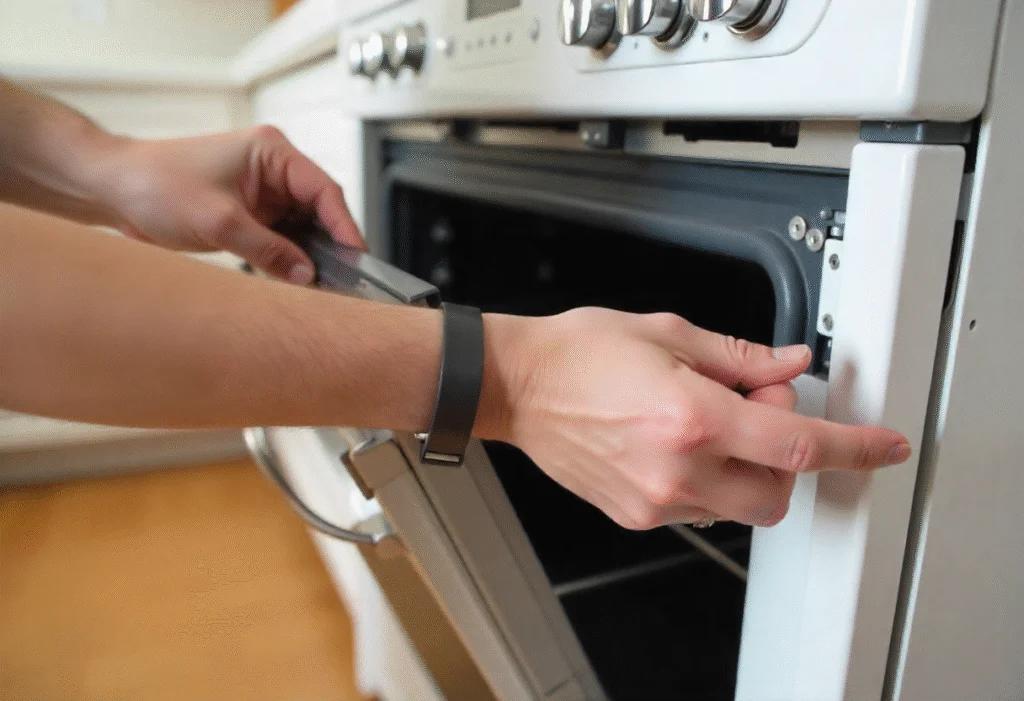
- Verify the door fully closes and the latch engages.
- Listen for a click when pressing start; no click often means door switches are bad.
- Test the start function with different power levels and cook times.
If the microwave runs but doesn’t heat:
- Try heating a cup of water for 30–60 seconds to confirm no-heat condition.
- A running fan with no heat suggests a magnetron or high-voltage diode problem.
- Burnt or metallic smells point to magnetron failure or a burnt waveguide.
If the turntable won’t spin:
- Remove the tray and check the coupler for cracks or wear.
- Inspect the roller ring and track for food buildup blocking motion.
- Listen for motor hum; no hum may mean motor or gearbox failure.
If you see sparks or arcing:
- Stop the microwave immediately and unplug it.
- Remove any metal or foil inside the cavity.
- Inspect the waveguide cover and cavity for burn marks and replace if damaged.
If the keypad or display is dead or shows errors:
- Try a power reset first.
- Error codes on the display often map to door switch, sensor, or control board faults. Refer to owner’s manual error key for exact code meaning.
Tools and tests that help:
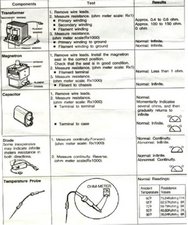
- Multimeter for continuity and voltage checks.
- Non-contact voltage tester for outlet checks.
- Basic hand tools: screwdrivers, nut drivers, and pliers.
- Safety equipment: insulated gloves and eye protection.
Diagnosing error codes and control board issues
When you see an error code, it shortens GE Microwave Oven Troubleshooting time. Codes can indicate sensors, door switches, or board faults.
How to handle error codes:
- Record the code shown on the display before resetting.
- Power cycle the microwave and see if the error returns.
- If a code maps to a door or temperature sensor, test those parts with a multimeter for continuity.
- For recurring control board errors, replacement of the board is often needed.

Parts, repair, replacement costs, and common fixes
Knowing cost ranges helps decide repair vs replace when doing GE Microwave Oven Troubleshooting.
Typical costs (US, approximate):
- Door switch: $15–$40 for part, $50–$120 labor.
- Turntable motor or coupler: $10–$50 for part, $40–90 labor.
- Magnetron: $60–$250 for part, $100–$300 labor depending on model.
- Control board: $50–$200 for part, $100–$200 labor.
When to replace the microwave:
- Repairs cost more than half the price of a new unit.
- Multiple failed components or major cabinet damage.
- Old units lacking safety features may be better replaced.

Preventive maintenance to avoid future problems
Simple care reduces the need for GE Microwave Oven Troubleshooting. Small habits protect parts and extend life.
Routine maintenance tips:
- Clean spills and splatters immediately to prevent arcing and odor.
- Avoid running empty or with metal inside the cavity.
- Check the door seal and gasket for wear and clean it gently.
- Keep vents and intake areas free of dust and grease.
- Use microwave-safe containers and avoid thin foil or metal objects.
Personal experience: real fixes, lessons, and mistakes to avoid
I’ve repaired many GE microwaves in home kitchens. One common mistake I saw was owners forcing the door to close when a small utensil blocked the latch. That broke the switch and doubled the repair cost. Another time, a humming sound led to a quick fix: a stuck roller ring cleaned in five minutes. My key lessons:
- Start with simple checks like outlet and reset.
- Document the symptom before disassembling.
- Don’t ignore odd smells or sparks; they often point to serious parts failure.
- Keep replacement parts and model numbers handy—order exact matches.

Common quick troubleshooting questions (PAA-style)
These quick questions help you get a fast answer during GE Microwave Oven Troubleshooting.
Why won’t my GE microwave turn on?
First check outlet power, plug, and breaker. If those are fine, the door switch or control board may be faulty.
Why does my GE microwave run but not heat?
A failed magnetron, diode, or capacitor is usually the cause. Have a technician test the high-voltage parts.
Can I replace the door switch myself?
Yes, if you are comfortable with basic tools and safety. Always unplug first and confirm part compatibility.

When to call a professional for GE Microwave Oven Troubleshooting
Call a licensed appliance technician when the issue involves high-voltage parts, internal wiring, or multiple failed components.
Signs you need a pro:
- Loud arcing, smoke, or persistent burning smell.
- Failed magnetron, capacitor, or high-voltage diode.
- Complex control board or power supply faults.
- No power despite outlet and breaker checks.
Frequently Asked Questions of Ge Microwave Oven Troubleshooting
What should I check first if my GE microwave is dead?
Start with the power source: test the outlet with another device, check the circuit breaker, and inspect the power cord for damage.
Why does my microwave make a loud humming or buzzing noise?
Humming can come from the magnetron or high-voltage components. It can also be a loose fan or turntable motor—stop use and inspect.
Is it safe to continue using a microwave that sparks sometimes?
No. Sparking indicates arcing or damage and can be a fire hazard. Stop using the microwave and inspect for metal inside or damaged cavity parts.
How long does a typical GE microwave last before major repairs?
With normal use and care, many microwaves last 7–10 years. Heavy use or poor maintenance often shortens that lifespan.
Are replacement parts easy to find for older GE models?
Many parts are still available, but some older or rare models may have limited availability. Confirm model number before ordering parts.
Conclusion
GE Microwave Oven Troubleshooting gives you the power to diagnose common issues, perform safe checks, and make informed repair decisions. Use the safety steps first, try the basic fixes, and call a pro for high-voltage or complex faults. Start today by testing your outlet, checking the door latch, and cleaning the cavity—small steps lead to big savings. Share your experience, subscribe for more appliance guides, or leave a comment if you need model-specific help.

