

An ice maker is a modern kitchen convenience that many people rely on daily. When it stops making ice, it can be more than a minor annoyance—especially during hot weather, family gatherings, or parties. Troubleshooting the problem can feel overwhelming if you are not familiar with the common causes or how to check them.
But with a little patience, clear steps, and some basic tools, you can often restore your ice maker without needing to call a repair service.

36% off Today’s Exclusive Deals
Limited-time Exclusive Deals. Check current discount on Amazon.
Check Price on Amazon As an Amazon Associate I earn from qualifying purchases.This guide will walk you through the most effective ways to troubleshoot an ice maker that is not making ice. You’ll learn how to identify the problem, what steps to take, and when it’s time to call an expert. Along the way, you’ll also find tables comparing common issues, practical tips that beginners often miss, and answers to frequently asked questions.
Let’s get started and bring back the ice!
How An Ice Maker Works
Understanding the basic process helps you know where to look when things go wrong. Most home ice makers are either built into a refrigerator or are standalone machines. The typical cycle includes:
- Water Fill: The ice maker gets water through a supply line.
- Freezing: The water is frozen into cubes.
- Ejection: Once frozen, the cubes are released into a storage bin.
- Repeat Cycle: The process repeats as needed.
If any step fails, the ice maker may stop producing ice. Knowing this cycle makes it easier to troubleshoot.
Common Reasons Why Ice Makers Stop Working
There are several possible reasons why an ice maker stops making ice. Below are the most frequent issues:
- Water supply problems
- Clogged filters
- Temperature problems
- Faulty parts
- Electrical issues
- User errors
Each issue has different symptoms and solutions. Let’s break them down in detail.
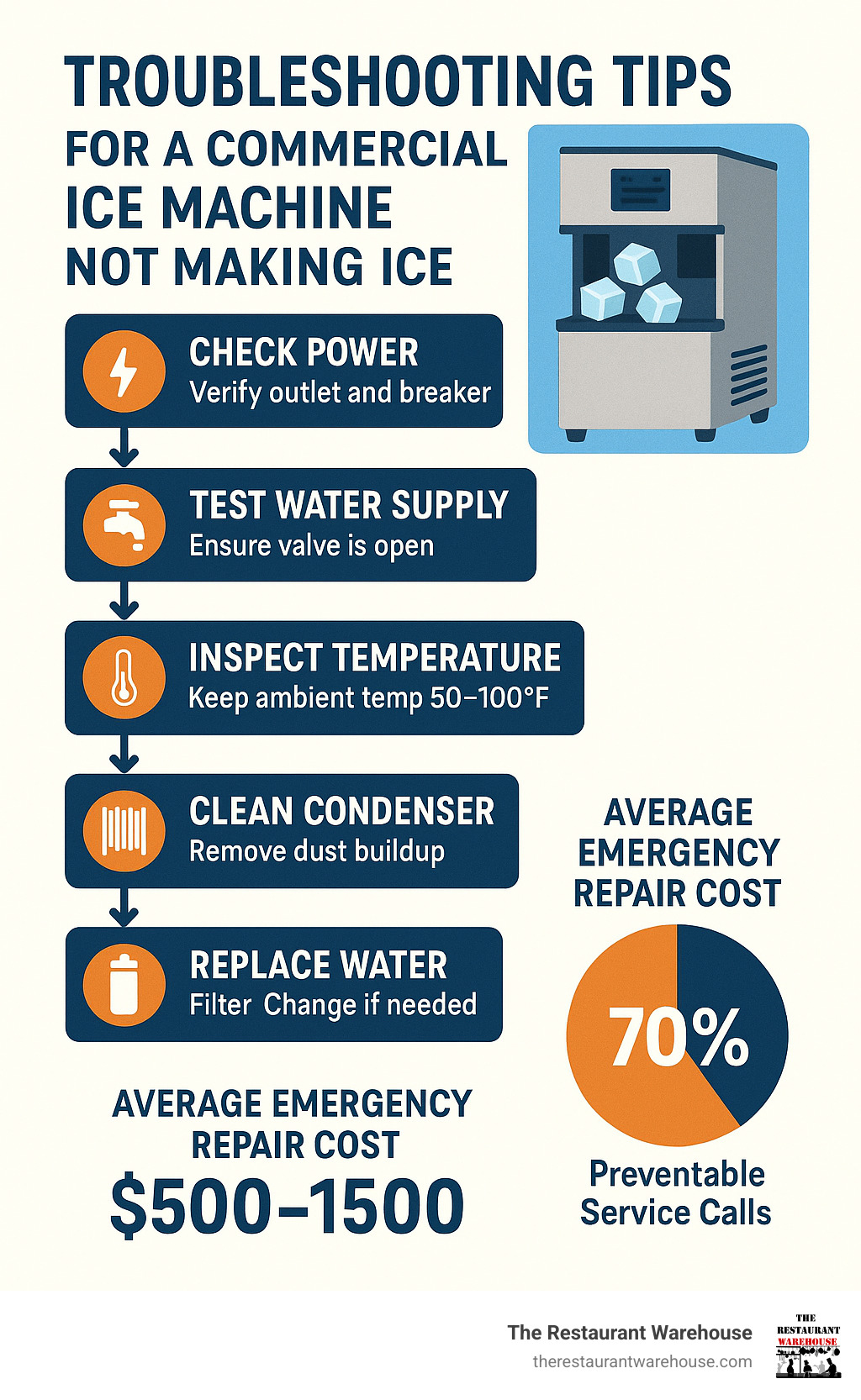
Checking The Basics First
Before you open your toolbox, start with these simple checks. Many ice maker problems are due to basic issues that are easy to fix.
1. Is The Ice Maker Turned On?
It sounds obvious, but sometimes the ice maker switch is off by mistake. Check if:
- The power switch inside the freezer is ON.
- For models with a wire arm, make sure the arm is down (the “on” position).
2. Is The Water Supply Line Connected?
No water, no ice. Check:
- The water supply valve behind the fridge is fully open.
- The line is not kinked or blocked.
3. Is The Ice Bin In Place?
Some ice makers won’t work if the bin is out of position. Make sure it is pushed all the way back.
4. Did You Wait Long Enough?
After cleaning, defrosting, or turning the unit back on, it may take up to 24 hours to produce ice again.
Water Supply Problems
If the basics look fine, the next step is to check the water supply in detail. Ice makers need a steady flow of water to work.
Water Inlet Valve Issues
The water inlet valve controls water flow into the ice maker. If it’s faulty, no water will reach the unit.
Symptoms:
- No ice production at all
- Ice cubes are small or hollow
How to check:
- Listen for a buzzing sound when the ice maker cycles. No sound may mean the valve isn’t working.
- Inspect for leaks around the valve and water line.
Solution: Replace the valve if it’s faulty or clogged.
Clogged Or Frozen Water Line
A blocked water line can stop ice production completely.
Symptoms:
- No ice at all
- Water dispenser on the fridge doesn’t work (if available)
How to fix:
- Unplug the fridge.
- Carefully inspect the water line for ice buildup or kinks.
- Thaw a frozen line by using a hair dryer on low heat (be careful to avoid melting plastic).
Non-obvious tip: Even a small kink or air bubble can block water. Straighten out any bends gently.

Ice Maker Filter Issues
Most refrigerators have a water filter. If it’s clogged, water flow drops and ice production stops.
How To Check The Filter
- Locate the filter (often inside the fridge compartment).
- Check the replacement date. Most filters need changing every 6 months.
- Remove and inspect the filter. If water flow improves with the filter removed, replace it.
What Happens With A Clogged Filter
- Ice cubes become smaller or stop altogether.
- Water dispenser (if present) slows down.
Practical insight: Always use the correct filter model for your fridge. Generic filters may not fit properly and can cause leaks.
Freezer Temperature Problems
The freezer must be cold enough (usually 0°F or -18°C) for ice to form. Warmer temperatures slow or stop ice production.
How To Check Freezer Temperature
- Use a simple freezer thermometer.
- Adjust the temperature setting if it’s above 5°F (-15°C).
- Make sure the door seals are clean and tight.
Common Causes Of Wrong Temperature
- The door is not closing fully.
- The freezer is too full or too empty (air cannot circulate).
- The condenser coils are dirty (reducing cooling).
Advanced tip: If your freezer is working but the ice maker isn’t, check for frost buildup near the ice maker. Frost can block moving parts.
Electrical And Mechanical Failures
Sometimes, the problem is inside the ice maker unit itself.
Faulty Ice Maker Motor
If the motor that moves the ejector arm fails, ice won’t be released.
Symptoms:
- Ice is frozen in the tray but not ejected.
- You hear a clicking or grinding noise.
Solution: The motor or the entire ice maker unit may need to be replaced.
Broken Mold Thermostat
This thermostat tells the ice maker when the ice is frozen. If it fails, the cycle stops.
How to check:
- Remove the ice maker (following your manual).
- Use a multimeter to test the thermostat for continuity.
Note: If you’re not comfortable with electrical tests, it’s safer to call a technician.
Defective Door Switch
The ice maker often won’t run if the freezer door switch is broken.
Symptoms:
- Interior light stays off or on when opening/closing the door.
- Ice and water dispensers don’t work.
Solution: Replace the door switch.
User Errors And Settings
Some ice maker problems come from simple mistakes or overlooked settings.
Wrong Ice Maker Setting
Many units have a small control panel. Check for:
- Vacation mode or Ice Off settings. These stop ice production.
- Child lock features (on some models).
Fix: Turn off these settings to resume ice production.
Ice Bin Full Or Jammed
If the bin is full or the cubes are stuck, the ice maker won’t make more ice.
- Empty the bin and check for clumps.
- Break up any frozen cubes blocking the mechanism.
Ejector Arm Blocked
If an ice cube is stuck in the ejector arm, clear it gently. Never use sharp objects, as you can damage the unit.
Comparing Common Ice Maker Problems
Understanding the symptoms helps you narrow down the cause. Here’s a comparison of the most frequent problems:
| Problem | Symptoms | Quick Fix |
|---|---|---|
| Water supply issue | No ice, no water from dispenser | Check water line and valve |
| Clogged filter | Slow or no ice, slow water | Replace filter |
| Temperature too high | Small or no ice, soft cubes | Lower freezer temperature |
| Faulty motor/thermostat | Ice in tray but not ejected | Replace motor or thermostat |
| User error | Unit turned off, bin not in place | Check settings and bin position |
Advanced Troubleshooting Steps
If the basic steps don’t work, try these advanced checks. These require more time and care.
Testing The Ice Maker Module
Most ice makers have a test button or a small hole for manual cycling. Consult your user manual for the location.
- Press and hold the test button.
- Watch for a complete cycle (water fill, freeze, eject).
- If nothing happens, the module may be faulty.
Checking The Water Pressure
Low water pressure can prevent the valve from opening.
- Use a water pressure gauge on the supply line.
- Most manufacturers require at least 20 psi.
Inspecting The Fill Tube
The fill tube can freeze or become blocked by mineral deposits.
- Unplug the fridge.
- Remove the tube and check for obstructions.
- Clean with warm water and a brush.
When To Call A Professional
Some problems need expert help. Call a qualified technician if:
- You see water leaks inside or behind the fridge.
- There’s a burning smell or visible damage to wiring.
- The ice maker is still not working after all troubleshooting steps.
Cost insight: A typical ice maker repair costs between $100 and $400 depending on the issue and your location.
Preventing Future Ice Maker Problems
Regular maintenance keeps your ice maker reliable. Here are simple actions that make a big difference:
- Change water filters every 6 months.
- Clean the ice bin monthly to stop mold and odors.
- Check the water line for leaks or kinks twice a year.
- Keep the freezer full but not packed—proper air flow is key.
- Defrost the freezer if you see frost buildup.
Pro tip: Use only filtered water if you have hard water. Minerals can clog lines and valves over time.
Diy Vs. Professional Repair: What’s Best?
Some repairs are safe for DIY, while others are not.
| DIY Repairs | Professional Repairs |
|---|---|
| Replacing filters Defrosting freezer Checking water lines |
Electrical faults Replacing motors Fixing leaks |
Always unplug your appliance before working on it, and follow safety instructions.
Smart Ice Makers And Common Mistakes
Newer ice makers with smart features have their own set of problems.
Software Or App Issues
Some models can be paused or reset through an app. If the ice maker is offline, check your Wi-Fi connection or app settings.
Firmware Updates
Check the manufacturer’s website for updates. A bug in the software can sometimes stop ice production.
Beginner’s insight: Many people forget to check app settings, assuming it’s a physical problem.
Comparing Standalone Vs. Built-in Ice Makers
Choosing the right type—and troubleshooting—depends on your setup.
| Feature | Standalone Ice Maker | Built-In (Refrigerator) |
|---|---|---|
| Typical Issues | Clogged pump, faulty timer | Water valve, filter, temperature |
| Ease of Access | Easy to remove and clean | Harder to access, often integrated |
| Maintenance | Needs regular descaling | Filter changes, defrosting |
Useful link: For more on appliance repair, see the official Refrigerator Wikipedia page.
Two Non-obvious Insights Most Owners Miss
- Air gaps in water lines: If you recently moved your refrigerator, small air bubbles may get trapped in the line, blocking water flow. Bleed the line by running the water dispenser for a few minutes (if available).
- Power surges: After a power outage, the ice maker control board may need to be reset. Unplug the fridge for 5 minutes, then plug it back in to reset the electronics.

Essential Tools For Troubleshooting
You don’t need many tools, but these can help:
- Screwdriver set: For removing panels.
- Multimeter: To check switches and thermostats.
- Hair dryer: For thawing frozen lines.
- Towel or tray: To catch any water.
Troubleshooting Step-by-step Summary
If you’re not sure where to start, follow this sequence:
- Make sure the ice maker is ON and the bin is in place.
- Check the water supply valve and line for kinks or leaks.
- Inspect the water filter and replace if necessary.
- Test the freezer temperature.
- Look for jammed ice or blocked ejector arms.
- Listen for unusual noises (clicks, grinding).
- Test the ice maker with the manual cycle button.
- Check the fill tube for ice or mineral blockages.
- Reset the ice maker by unplugging the fridge for 5 minutes.
- Call a technician if none of these steps work.
Frequently Asked Questions
Why Is My Ice Maker Making Ice Slowly?
Slow ice production can be caused by a clogged filter, high freezer temperature, or low water pressure. Make sure the freezer is set to 0°F (-18°C), the water filter is clean, and the supply line is not kinked.
Can I Use My Ice Maker Without A Water Filter?
Some models allow you to run the ice maker without a filter, but this may affect water quality and cause mineral buildup. Always use the filter recommended by the manufacturer to avoid damage.
How Often Should I Clean My Ice Maker?
Clean the ice bin and interior parts at least once a month. Use warm water and mild soap, then rinse thoroughly. Regular cleaning prevents bacteria and mold.
What Size Ice Cubes Should My Ice Maker Produce?
Most home ice makers produce cubes about 3/4 inch square. If your cubes are much smaller or hollow, check for water supply or filter issues.
My Ice Maker Is Noisy—should I Be Worried?
Some noise is normal, especially during the ice drop. However, loud clicks, grinding, or buzzing can mean a mechanical problem. If the noise is new or very loud, inspect the unit or call for service.
An ice maker that stops working can be frustrating, but with careful troubleshooting, most problems are easy to find and fix. Remember to check the basics first, keep up with regular maintenance, and don’t hesitate to ask for professional help if you’re unsure.
With these steps, you’ll have a steady supply of ice for every occasion.

