

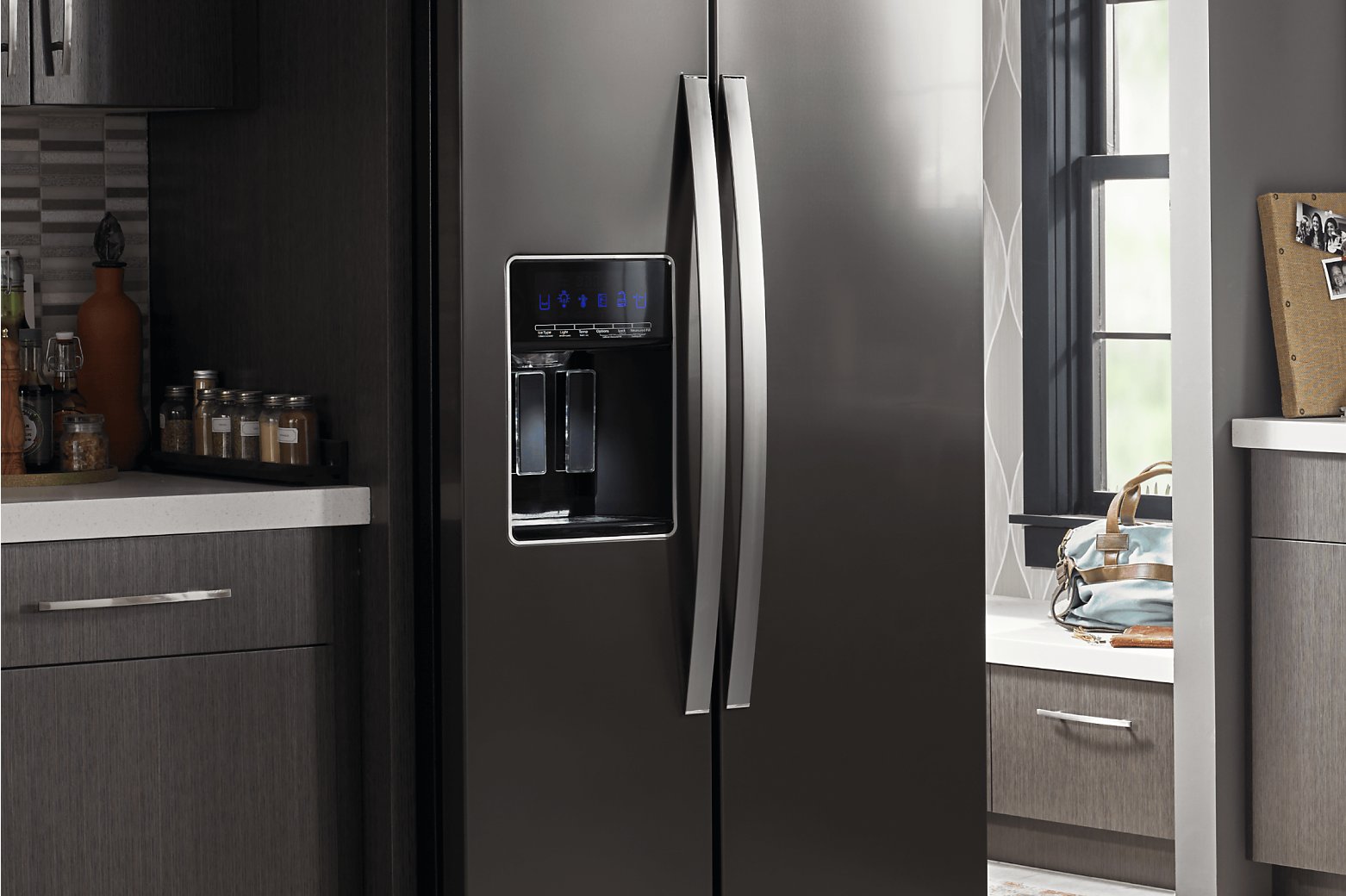
Many people trust Whirlpool refrigerators for their reliable performance and practical features. The Whirlpool Wrb322Dmbm00 is a popular bottom-freezer model, known for its efficient cooling and user-friendly design. However, like any appliance, even dependable machines can have issues. One of the most common problems users face is when the ice maker stops working or produces less ice than expected.
Getting your Whirlpool Wrb322Dmbm00 ice maker back on track does not always need a service call. With some guidance, you can often identify the cause and fix it yourself. This article explains how the ice maker works, the most common issues, and step-by-step troubleshooting.

36% off Today’s Exclusive Deals
Limited-time Exclusive Deals. Check current discount on Amazon.
Check Price on Amazon As an Amazon Associate I earn from qualifying purchases.You’ll learn practical checks, common mistakes, and when it’s time to call a professional. Let’s make sure you never run out of ice again.
How The Whirlpool Wrb322dmbm00 Ice Maker Works
Before you start troubleshooting, it helps to know how your ice maker operates. The Whirlpool Wrb322Dmbm00 uses a simple, automatic ice-making system. Here’s what happens inside:
- Filling: A water inlet valve opens and lets water flow into the ice maker tray.
- Freezing: The water sits in the tray and freezes into ice cubes.
- Ejecting: A motor turns a set of ejector blades, pushing the ice cubes into the storage bin.
- Refilling: The cycle repeats as long as the ice bin isn’t full.
A sensor or arm detects the ice level. When the bin is full, the ice maker pauses. If the bin gets low, it starts again. Understanding these steps makes it easier to spot where things might be going wrong.
Common Ice Maker Problems
You might notice different symptoms if your Whirlpool Wrb322Dmbm00 ice maker is not working right. Each problem points to a different cause. Here are the most common issues:
- No ice at all
- Small or misshapen ice cubes
- Slow ice production
- Ice tastes bad or smells
- Ice maker leaking water
- Ice stuck in the mold
- Ice bin overflowing
Let’s look at how to troubleshoot each of these.
Step-by-step Troubleshooting Guide
Most ice maker issues can be fixed with basic checks. Work through these steps in order for the best results.
1. Check The Power And Controls
Start with the basics—sometimes the problem is simple.
- Make sure the refrigerator is plugged in and turned on.
- Check the ice maker’s power switch (often a lever or slider near the ice bin). It should be set to “On.”
- Some models have a control panel. Confirm that ice making is enabled.
If your fridge has lost power recently, the ice maker may need time to reset.
2. Confirm The Water Supply
The ice maker needs water to work, so problems here are common.
- Is the water supply line connected and the valve open?
- Look for kinks or damage in the water line behind the fridge.
- Test the water dispenser (if your model has one). If water does not flow, there is likely a supply issue.
Sometimes, the inlet valve can get clogged with mineral deposits. You can remove the valve and check for blockages, but turn off the water and unplug the fridge first.
3. Inspect The Freezer Temperature
The ice maker only works if the freezer is cold enough. Whirlpool recommends keeping the freezer at 0°F (-18°C).
- Use a thermometer to check the actual temperature.
- If it’s too warm, check if the door is closing fully or if the seal is damaged.
- Overloading the freezer can block air vents, making it harder to cool.
A warm freezer can slow or stop ice production entirely.
4. Examine The Ice Maker Arm Or Sensor
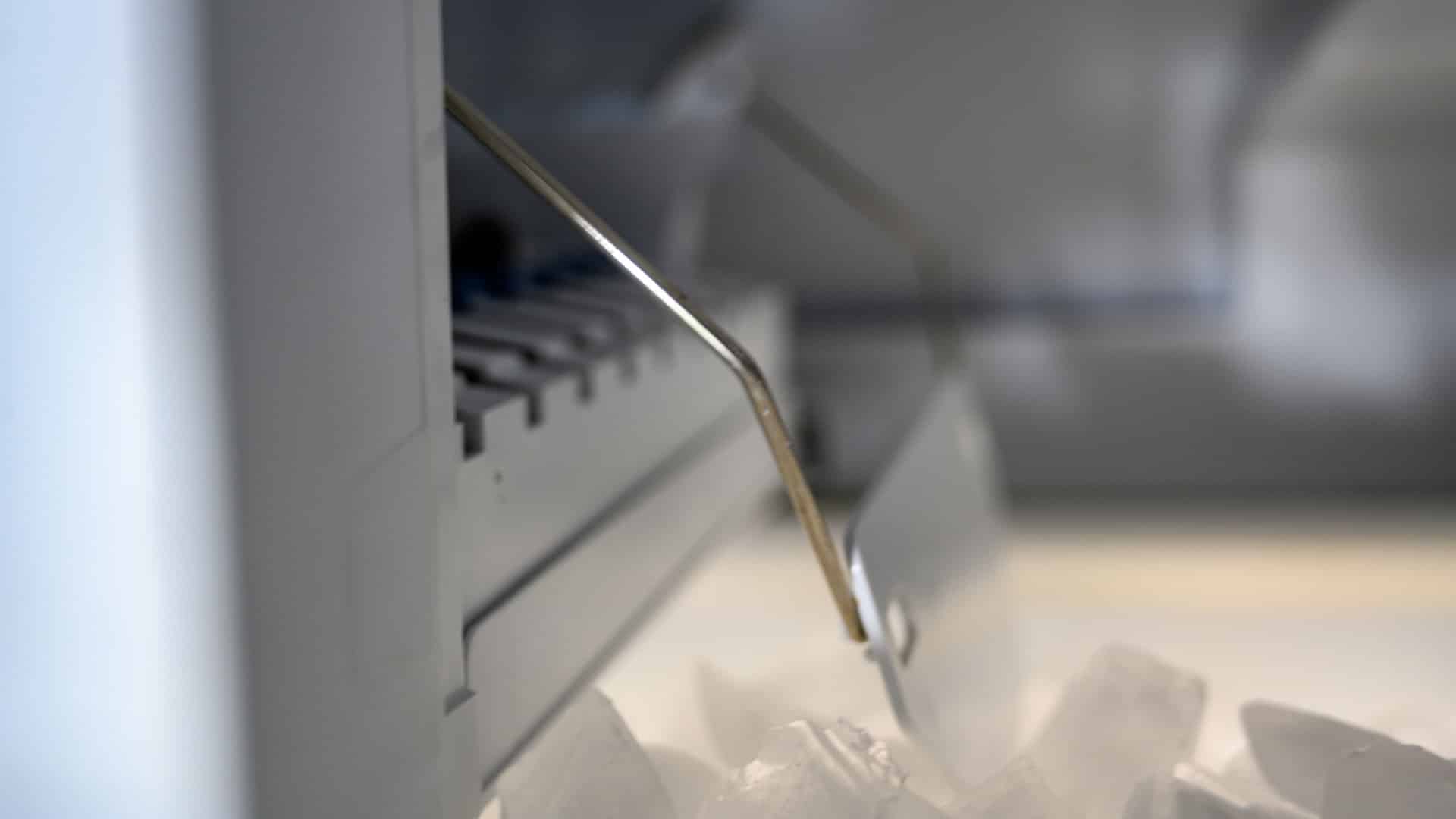
If the ice level sensor (often a metal arm) is stuck in the “up” position, the ice maker thinks the bin is full and will not make more ice.
- Make sure nothing is blocking the arm.
- Gently move the arm down to restart ice production.
- If your model has an optical sensor, clean it with a soft cloth.
Be careful not to force or bend any parts.
5. Check For Ice Blockages
Sometimes, ice cubes get stuck in the mold or the chute, stopping new cubes from forming or falling.
- Remove the ice bin and look for jams.
- If cubes are stuck to the mold, use a plastic utensil to gently free them.
- Avoid using sharp tools that could damage the ice maker.
6. Test The Water Inlet Valve
The water inlet valve controls water flow to the ice maker. If it fails, no water gets in.
- Listen for a click or buzz when the ice maker should be filling. No sound can mean a bad valve.
- You can test the valve with a multimeter for continuity. If it fails, replacement is needed.
A faulty valve is one of the most common causes of no ice.
7. Inspect The Ice Mold Heater
Ice molds have a small heater to help cubes release. If the heater fails, cubes may get stuck.
- Check for ice stuck to the mold, especially in humid conditions.
- Heaters are tricky to test without special tools, but a technician can help.
8. Replace The Water Filter
A clogged water filter can reduce water flow and ice quality.
- Whirlpool recommends changing the filter every 6 months.
- If you notice small cubes or slow production, try replacing the filter.
Always use the correct filter model for your fridge.
9. Reset The Ice Maker
Sometimes, a simple reset can clear small glitches.
- Unplug the refrigerator for 5 minutes, then plug it back in.
- Some ice makers have a reset button—check your manual for details.
- After resetting, wait a few hours to see if ice production returns.
10. Check For Error Codes
Some Whirlpool refrigerators display error codes on the control panel.
- If you see a code, consult your user manual for its meaning.
- Codes can point to specific issues, like sensor failures or blocked lines.
Address the code as described—sometimes, a simple fix can solve the problem.
Diagnosing Specific Ice Maker Issues
Let’s focus on the most common symptoms and what they mean.
No Ice Production
If your ice maker isn’t making any ice, check these points:
- Is the ice maker switched on?
- Is the freezer cold enough?
- Is water reaching the ice maker?
Often, the problem is a blocked water line or a failed water valve.
Small Or Misshapen Ice Cubes
This usually points to low water pressure or a clogged filter.
- Replace the water filter.
- Make sure the supply line is not kinked.
- Check your home’s water pressure (should be at least 20 psi for good ice production).
Slow Ice Production
Slow ice making can be caused by:
- Freezer temperature set too high
- Dirty condenser coils reducing cooling
- Overfilled freezer blocking airflow
Try adjusting the freezer, cleaning coils, and spacing items for better air movement.
Ice Tastes Bad Or Smells
Bad-tasting ice often comes from:
- Old or dirty water filter
- Stale ice in the bin (throw it away and let the bin refill)
- Food odors from the freezer (keep food covered)
Change the filter, clean the bin, and check for leaks in stored food.
Ice Maker Leaking Water
Leaks can be messy and may freeze in the freezer.
- Check the water line for loose connections.
- Make sure the ice maker is level—tilted units can overflow.
- Inspect the fill cup for ice blockages, which can cause overflows.
Ice Stuck In The Mold
This happens when the heater does not work or water is not freezing evenly.
- Wait for the freezer to reach the right temperature.
- Gently remove stuck cubes.
- If the problem repeats, the mold heater may need service.
Ice Bin Overflowing
If the ice bin is overflowing, the sensor arm or optical sensor may be broken or blocked.
- Clear any ice jammed around the sensor.
- Replace faulty sensor arms if needed.
Common Parts That May Need Replacement
Ice maker repairs are sometimes as simple as replacing a worn-out part. Here are the most common ones:
| Part Name | Typical Lifespan | When to Replace |
|---|---|---|
| Water Inlet Valve | 5–10 years | No water reaches ice maker; fails continuity test |
| Ice Maker Assembly | 8–12 years | Motor does not turn; heater fails; repeated ice jams |
| Ice Level Sensor/Arm | 10+ years | Ice maker won’t stop or start; sensor arm stuck or broken |
| Water Filter | 6 months | Slow ice; bad taste; filter indicator on |
If you replace a part, always unplug the refrigerator and shut off the water supply before beginning work.
Whirlpool Wrb322dmbm00 Ice Maker Vs. Other Whirlpool Models
How does the Wrb322Dmbm00 ice maker compare to similar Whirlpool models? Here’s a quick overview:
| Model | Ice Maker Type | Ice Production Rate | Water Filter Required |
|---|---|---|---|
| Wrb322Dmbm00 | Automatic (bottom freezer) | Approx. 3 lbs/day | Yes |
| Wrt518Szfm00 | Manual (top freezer) | Approx. 2 lbs/day | No |
| Wrs321Sdhz | Automatic (side-by-side) | Approx. 4.5 lbs/day | Yes |
The Wrb322Dmbm00’s ice maker is reliable, but not the fastest. If you need more ice, a side-by-side model may be better.
Practical Tips For Reliable Ice Production
Many users miss these simple but effective tips:
- Keep the freezer at 0°F: This is essential for ice to form quickly and release properly.
- Don’t overload the freezer: Too much food restricts airflow and slows ice making.
- Replace the water filter every 6 months: Even if ice production seems fine, old filters can cause hidden problems.
- Level the refrigerator: An uneven fridge can cause leaks or jams.
- Open the door less often: Every time you open the freezer, warm air enters and slows ice production.
- Clean the ice bin regularly: Old ice can clump and cause jams.
These small steps can prevent most ice maker headaches.
When To Call A Professional
Some repairs need a trained technician. Call for help if:
- You hear loud grinding or clicking noises from the ice maker.
- The refrigerator leaks water onto the floor.
- You see error codes that won’t clear after a reset.
- Electrical tests or part replacements feel unsafe or confusing.
A skilled technician can quickly diagnose and repair problems, often saving you time and money compared to guessing or replacing parts at random.
Mistakes To Avoid
Beginners often make these mistakes when troubleshooting:
- Skipping the basics: Always check power, settings, and water supply first.
- Forcing stuck parts: Don’t use sharp tools or apply too much force—you may break the ice maker.
- Ignoring regular maintenance: Old filters, dirty bins, and clogged coils are easy to forget but cause real problems.
- Not checking the manual: Each model is slightly different; your user guide is the best source for diagrams and error codes.
If you try a fix and nothing changes, retrace your steps and check the simple things again.
Tools And Supplies For Troubleshooting
Having the right tools makes the job easier. You might need:
- Phillips and flathead screwdrivers
- A small cup or towel for catching water
- Needle-nose pliers (for hoses and connectors)
- A multimeter (for electrical tests)
- Replacement water filter
- Mild soap and a sponge (for cleaning)
Always unplug the refrigerator and turn off the water before working on the ice maker.
Real-world Example: Fixing A Blocked Water Line
Imagine you notice your Whirlpool Wrb322Dmbm00 has stopped making ice. You check the ice maker switch—it’s on. The freezer is cold, but the ice bin is empty. Here’s what you do:
- Pull the fridge out and check the water line. You spot a sharp bend (kink) in the line.
- You carefully straighten the line and check for cracks.
- You test the water dispenser—it works again.
- Within a few hours, the ice maker begins to produce ice.
This simple fix is common. Many users miss the water line behind the fridge, but it’s one of the most important checks.
Water Quality And Ice Production
Water quality can affect both ice taste and the health of your ice maker.
- Hard water leaves mineral deposits that clog valves and filters.
- Chlorine or other chemicals can cause bad taste or odor.
If you live in an area with hard water, consider using a refrigerator water filter or a whole-house system. For more on water quality and appliance maintenance, the US Environmental Protection Agency offers useful advice.
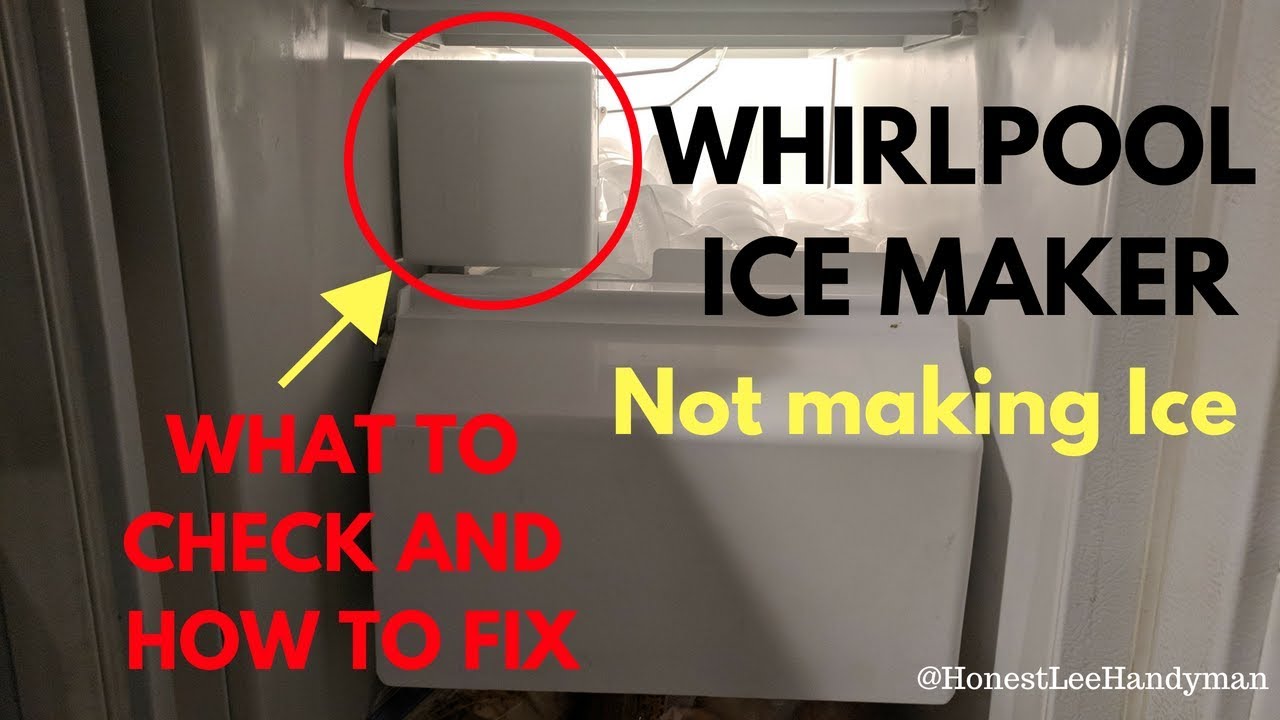
Resetting The Whirlpool Wrb322dmbm00 Ice Maker
If you need to reset the ice maker, follow these steps:
- Unplug the refrigerator and wait for 5 minutes.
- Plug it back in.
- Open the freezer and locate the ice maker.
- If your model has a reset button, press and hold it for 10 seconds.
- Wait several hours to see if ice production resumes.
A reset can clear minor glitches in the control board or sensors.
Maintenance Schedule For Optimal Performance
Regular maintenance keeps your ice maker running smoothly. Here is a suggested schedule:
| Task | Frequency |
|---|---|
| Replace water filter | Every 6 months |
| Clean ice bin | Monthly |
| Check water line for leaks or kinks | Every 3 months |
| Inspect freezer door seal | Every 3 months |
| Vacuum condenser coils | Every 6–12 months |
Set reminders to make these tasks a habit. Regular care prevents most breakdowns.
Frequently Asked Questions
Why Is My Whirlpool Wrb322dmbm00 Ice Maker Not Making Ice After Replacing The Filter?
After changing the water filter, air can get trapped in the line. Run several cups of water through the dispenser to clear air. Also, check that the filter is fully seated. Ice production should resume within a few hours.
How Long Does It Take For The Ice Maker To Produce Ice After Resetting?
After a reset, the ice maker usually takes 2 to 4 hours to make the first batch of ice. Full production may take up to 24 hours, especially if the freezer was just restocked.
Can I Manually Fill The Ice Tray To Test The Ice Maker?
Yes, you can pour a small amount of water into the ice mold. If the ice is ejected after freezing, the problem is likely with the water supply. If not, the ejector motor or heater may be faulty.
Is It Safe To Use Generic Water Filters In My Whirlpool Refrigerator?
It’s best to use Whirlpool-approved filters. Generic filters may not fit well, can leak, or fail to filter out contaminants. Always check for certification before buying alternatives.
What Should I Do If I Hear Loud Noises From The Ice Maker?
Some noise is normal, like ice dropping into the bin. But loud grinding, clicking, or buzzing can mean a mechanical problem. Turn off the ice maker and call a technician if the noise continues.
Solving ice maker problems in your Whirlpool Wrb322Dmbm00 is often straightforward with the right approach. With regular maintenance, careful troubleshooting, and a little patience, you can enjoy a steady supply of fresh ice for years to come.

