

Air Conditioner Troubleshooting Guide helps you diagnose common AC faults and fix them safely.
I've spent years diagnosing and repairing residential and light-commercial HVAC systems, and this Air Conditioner Troubleshooting Guide distills that hands-on experience into clear steps you can trust. Read on to learn how to pinpoint problems, try safe DIY fixes, know when to call a pro, and keep your AC running efficiently year-round.

36% off Today’s Exclusive Deals
Limited-time Exclusive Deals. Check current discount on Amazon.
Check Price on Amazon As an Amazon Associate I earn from qualifying purchases.
Why follow an Air Conditioner Troubleshooting Guide?
An Air Conditioner Troubleshooting Guide saves time and money by showing you logical checks before calling a technician. It helps you spot simple fixes such as dirty filters or a tripped breaker, and it explains when issues are electrical or mechanical. Using a guide reduces guesswork and protects your equipment from accidental damage.

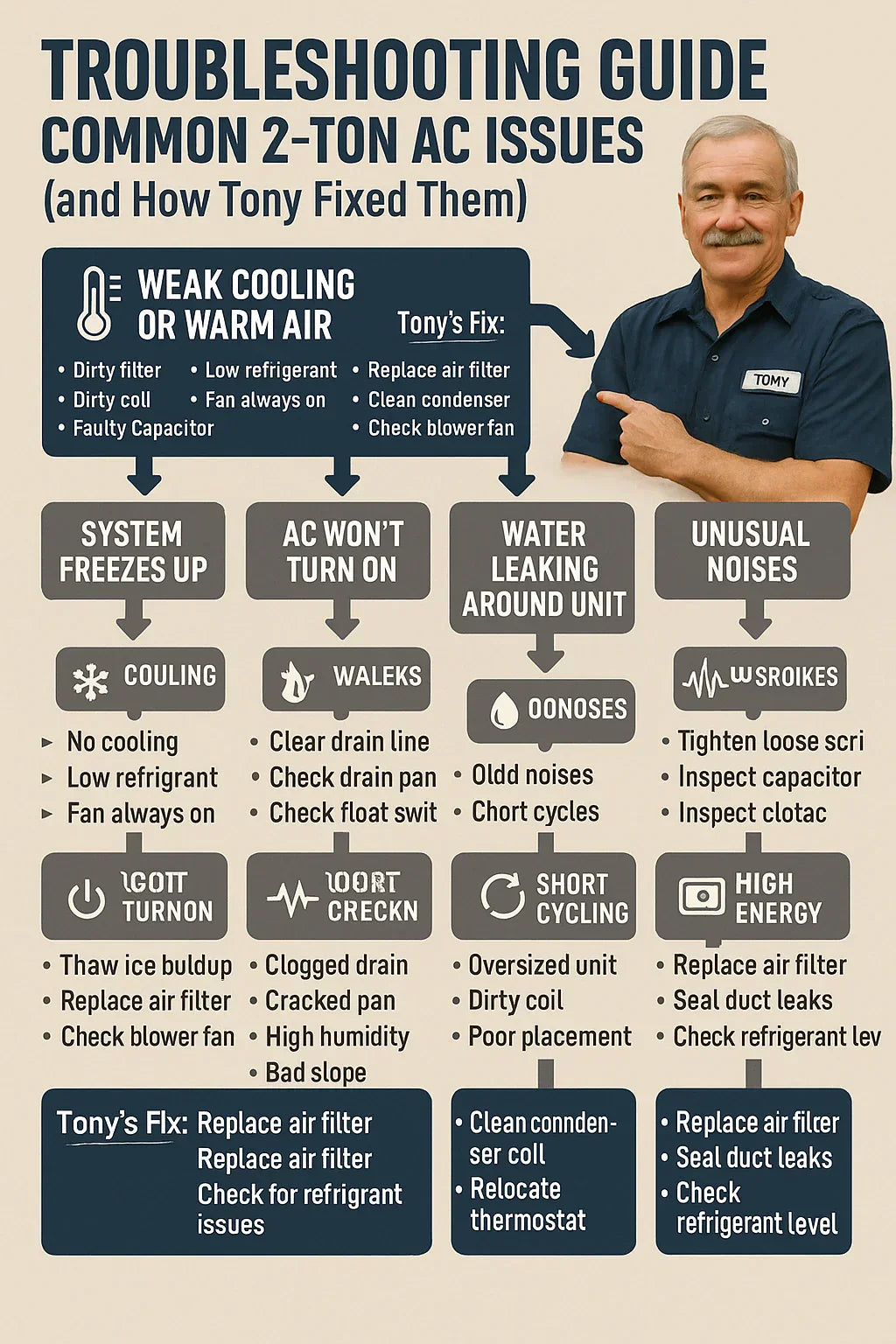
Common AC problems and likely causes
Knowing common problems helps you use the Air Conditioner Troubleshooting Guide more effectively. Below are typical symptoms and what usually causes them.
- AC not cooling
- Dirty filters, low refrigerant, or blocked condensers often cause poor cooling.
- Short cycling (turns on and off rapidly)
- Thermostat issues, oversized unit, or refrigerant problems can make units short cycle.
- Strange noises
- Loose parts, fan motor wear, or compressor issues produce rattles, squeaks, or bangs.
- Water leaks or pooling
- Clogged condensate drain or frozen evaporator coils lead to leaks.
- Bad odors
- Mold in the drain pan or ductwork and burnt wiring can cause smells.
- Unit won't start
- Tripped breakers, blown fuses, bad capacitors, or faulty thermostats are common culprits.
- Frozen coils
- Restricted airflow or low refrigerant often causes coils to ice over.
This Air Conditioner Troubleshooting Guide focuses on safe, high-yield checks first. Follow the order: power, airflow, then cooling circuits, and finally mechanical parts.
Step-by-step Air Conditioner Troubleshooting Guide
Use this checklist to work through common faults. Perform steps in order and stop if you find a clear issue.
- Safety first
- Turn power off at the thermostat and outdoor disconnect before touching components.
- Use insulated tools and wear eye protection.
- Check power and controls
- Verify thermostat settings and batteries.
- Inspect the main breaker and any outdoor disconnect switches.
- Inspect and replace filters
- Dirty filters reduce airflow instantly; replace or clean them.
- Check monthly during heavy use season.
- Clear outdoor unit
- Remove leaves, debris, and obstructions from the condenser.
- Keep 2 feet of clearance around the unit.
- Check airflow and vents
- Confirm supply vents are open and return vents are not blocked.
- Listen for weak blower sound that suggests fan issues.
- Look for leaks and ice
- Check condensate drain lines and pans.
- If coils are frozen, turn the unit off and defrost before continuing.
- Test basic electrical parts
- With power on, test capacitors and contactors if you are comfortable using a multimeter.
- If unsure, call a licensed technician.
- Note error codes
- Modern systems may flash diagnostic lights or show codes on thermostats.
- Record codes and consult the manual or technician.
Personal note: I once diagnosed a “broken” AC that was simply on the wrong thermostat mode. Double-checking the basics saved the homeowner an expensive repair call.

Diagnosing specific issues (deep dive)
This section expands the Air Conditioner Troubleshooting Guide into targeted checks for frequent failures.
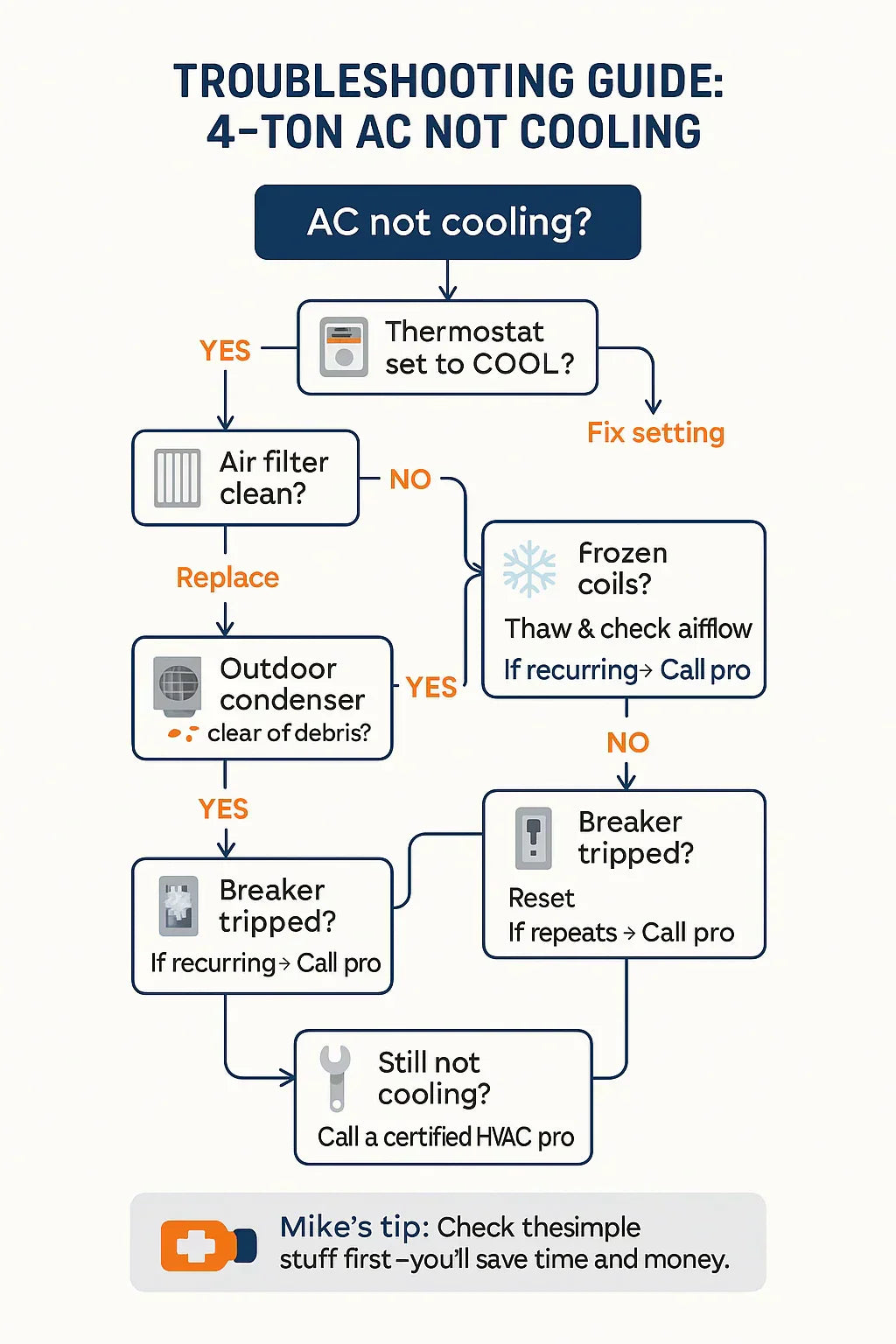
Not cooling enough
- Confirm thermostat is set to cool and lower than room temperature.
- Replace the air filter and ensure indoor blower runs.
- Check outdoor coil for heavy dirt or blocked airflow.
- If basic checks fail, low refrigerant or compressor wear may be the cause.
Short cycling
- Inspect thermostat placement; direct sunlight or vents can cause false readings.
- Ensure the unit is correctly sized; oversized units often short cycle.
- Check refrigerant pressures and the control board for faults.
Noisy compressor or fans
- Tighten loose panels and fan blades.
- Lubricate fan bearings only if design allows.
- Replace worn fan motor mounts or compressors if noise persists.
Water leaks or overflowing drain
- Clear condensate drain lines with a wet/dry vacuum or algae cleaner.
- Replace cracked drain pans and check slope of drain piping.
- Inspect HVAC condensation pump if installed.
Frozen coils
- Turn off unit and let ice melt.
- Inspect for dirty filters, blocked returns, or failed blowers.
- Low refrigerant can also cause freezing; only certified techs should add refrigerant.
Electrical faults and breakers
- Reset tripped breakers after finding the root cause.
- Test capacitors and run capacitors carefully; they store charge even when off.
- Replace failing contactors and relays; use correct part ratings.
This Air Conditioner Troubleshooting Guide emphasizes safety: don’t attempt high-voltage repairs unless trained. If you repeatedly find electrical failures, stop and call a licensed technician.
Tools and safety tips for troubleshooting
Having the right tools reduces risk and time. Use simple tools first.
- Basic toolkit
- Screwdrivers, nut drivers, flashlight, and adjustable wrench.
- Electrical tools
- Multimeter with AC/DC and capacitance testing features.
- Cleaning and maintenance tools
- Soft brush, coil cleaner spray, wet/dry vacuum for drains.
- Safety gear
- Safety glasses, insulated gloves, and a non-contact voltage tester.
Safety tips
- Always shut power at the breaker and outdoor disconnect before working.
- Avoid touching live electrical parts. If you must, use insulated tools.
- When in doubt about capacitors or refrigerant, call a professional.
Maintenance tips to prevent problems
Routine care extends system life and reduces emergency repairs. Follow this Air Conditioner Troubleshooting Guide’s maintenance schedule.
- Monthly during heavy use
- Inspect and replace air filters.
- Every 3 months
- Check and clear outdoor condensers and remove debris.
- Twice a year (spring and fall)
- Schedule professional tune-ups for refrigerant, electrical checks, and airflow tests.
- Annually
- Clean evaporator and condenser coils and check heat exchanger integrity in heat pump systems.
Small seasonal checks often end up preventing major failures. My experience shows that simple filter discipline avoids more than half of household AC calls.
When to call a professional
Some problems require a licensed HVAC technician. Use the Air Conditioner Troubleshooting Guide to decide when.
- Call a pro if:
- You suspect refrigerant leaks or low pressure.
- The compressor or motor sounds like grinding or clicking.
- There are persistent electrical trips or burning smells.
- The unit won’t power on after breakers and disconnects are verified.
- For warranties
- Unauthorized DIY on refrigerant or sealed systems can void warranties.
- Keep service records and technician reports for warranty claims.
Technicians bring tools, gauges, and certification that keep repairs safe and compliant with regulations.
People also ask (PAA-style)
Q: How quickly can I fix a dirty filter issue?
A: Replacing a dirty filter takes 5 minutes and often restores normal airflow immediately.
Q: Can I add refrigerant myself?
A: Adding refrigerant requires certification and tools; it’s safer and legal to hire a licensed technician.
Q: Why does my AC freeze overnight?
A: Freezing usually stems from restricted airflow or low refrigerant; turn off the unit to defrost and inspect filters.
Frequently Asked Questions of Air Conditioner Troubleshooting Guide
What is the first thing I should check if my AC stops cooling?
Check the thermostat settings, replace the air filter, and verify the circuit breaker is on. These basic checks solve many simple cooling failures.
How often should I change my AC filter?
Change standard filters every 1–3 months depending on use and pet or dust load. More frequent changes improve airflow and reduce strain on the system.
Can a dirty outdoor unit cause my AC to stop working?
Yes. A clogged condenser restricts heat transfer and reduces cooling efficiency. Clear debris and clean fins to restore performance.
Is a loud banging noise dangerous?
Banging may indicate a loose part, compressor issue, or motor mount failure and could cause further damage. Stop the unit and call a technician if you hear severe banging.
How do I know if my AC needs refrigerant or a leak repair?
Low refrigerant often causes weak cooling and frozen coils. A pressure test by a certified technician is required to confirm leaks and safe recharging.
What maintenance can I do myself safely?
You can replace filters, clear debris from the outdoor unit, and keep vents unobstructed. Leave refrigerant and high-voltage work to certified pros.
Conclusion
This Air Conditioner Troubleshooting Guide gives clear steps to diagnose common AC issues, perform safe basic fixes, and decide when professional help is necessary. Start with power and airflow checks, use simple tools, and keep up a routine maintenance rhythm to avoid most problems. Take action today: inspect your filter, clear the outdoor unit, and book a seasonal tune-up to keep your system reliable. If this guide helped, leave a comment or subscribe for more practical HVAC tips.

